UN1913 氖,冰冻液体
NEON, REFRIGERATED LIQUID
基本信息
| UN 编号 | UN1913 |
|---|---|
| 中文名称 | 氖,冰冻液体 |
| 英文名称 | NEON, REFRIGERATED LIQUID |
| 危险类别 | 第2.2类 |
| 包装类别 | 本条目未划定包装类别 |
| 海洋污染物 | 否 |
| 有限数量 | 120 mL |
| 例外数量 | E1 |
| EmS 应急措施 | F-C,S-V(F-C, S-V) |
物质性质与外观
液化的惰性气体。比空气轻 (0.7)。
Liquefied, inert gas. Lighter than air (0.7).
出处:IMDG Code 42-24 第 660 页
包装要求
本条目适用的包装导则: P203 ;有限数量 120 mL,例外数量 E1。
P203
P203 封闭式低温容器要求: (1) 须满足第4.1.6.1条的一般要求。 (2) 须满足第6.2 章的要求。 (3) 封闭式低温容器需隔热,以免结霜。 (4) 试验压力冷冻液体须以下列最低试验压力罐装封封闭低温容器: (a)对于具有真空绝缘的封闭式低温容器,试验压力不得小于已充满容器的最大内部压力(包括充注和排放期间的压力)总和的1.3倍,再加上100kPa(1巴); (b)对于其他封闭式低温容器,试验压力不得小于已充满容器最大内压的1.3倍,同时考虑充注和排放过程中产生的压力。 (5) 充灌度对于非易燃、无毒冷冻液化气,在充灌温度及100kPa(1巴)压力下,液相体积不得超过压力容器水容量的98%。 对于易燃冷冻液化气体,容器内充灌的气体须保持低于以下水平:如果容器内装物的温度升高到蒸气压等于泄压阀开启压力的温度,液相体积将达到该温度下水容量98%。 (6) 减压装置封闭式低温容器须至少安装一个减压装置。 (7) 兼容性用于确保接头密封性或维护封闭件的材料须与内容物相容。对于用于运输氧化性气体 (即具有第5.1类副危险)的容器,这些材料不得与这些气体发生危险反应。 (8) 定期检查根据第6.2.1.6.3条对减压阀进行定期检查和试验的频率不得超过5年。 P203 开敞式低温压力容器要求: 仅下列第2.2类非氧化性冷冻液化气体才可使用开敞式低温压力容器运输:UN1913、 1951、1963、1970、1977、2591、3136和3158。对于这些气体,当用作冷却剂时,须适用第 5.5.3节的要求。 开敞式低温压力容器的构造须满足以下要求: (1) 容器的设计、制造、试验和装备须能承受正常使用和正常运输条件下可能遇到的所有情况,包括疲劳。 (2) 容量不得超过450L。 (3) 压力容器须为双层结构,内外壁之间为真空(真空隔热)。隔热层须防止容器外部结霜。 (4) 构造材料在使用温度下须具有适当的机械性能。 (5) 与危险货物直接接触的材料不得受到所运输危险货物的影响或降低其强度,也不得造成危险影响,如催化反应或与危险货物发生反应。 (6) 玻璃双层结构的容器须具有外包装,外包装须装有适当的衬垫或吸收材料,以承受正常运输条件下可能出现的压力和冲击。 (7) 容器须设计为在运输过程中保持直立,例如,容器底部水平尺寸须大于容器装满后的重心高度,或安装在万向架上。 (8) 定期检查根据第6.2.1.6.3条对减压阀进行定期检查和试验的频率不得超过5年。 开敞式低温压力容器要求: 仅下列第2.2类非氧化性冷冻液化气体才可使用开敞式低温压力容器运输:UN1913、 1951、1963、1970、1977、2591、3136和3158。对于这些气体,当用作冷却剂时,须适用第 5.5.3节的要求。 开敞式低温压力容器的构造须满足以下要求: (1) 容器的设计、制造、试验和装备须能承受正常使用和正常运输条件下可能遇到的所有情况,包括疲劳。 (2) 容量不得超过450L。 (3) 压力容器须为双层结构,内外壁之间为真空(真空隔热)。隔热层须防止容器外部结霜。 (4) 构造材料在使用温度下须具有适当的机械性能。 (5) 与危险货物直接接触的材料不得受到所运输危险货物的影响或降低其强度,也不得造成危险影响,如催化反应或与危险货物发生反应。 (6) 玻璃双层结构的容器须具有外包装,外包装须装有适当的衬垫或吸收材料,以承受正常运输条件下可能出现的压力和冲击。 (7) 容器须设计为在运输过程中保持直立,例如,容器底部水平尺寸须大于容器装满后的重心高度,或安装在万向架上。 P203 (8) 容器的开口须安装允许气体逃逸的装置,防止液体溅出,并须使其在运输过程中保持在原位。 (9) 开敞式低温容器须通过压印、雕刻或蚀刻等方式永久显示以下标记: (a) 制造商名称和地址; (b) 型号或名称; (c) 序列号或批号; (d) 容器拟装气体的UN编号和正确运输名称; 容器的容量(以升表示)
P203 This instruction applies to class 2 refrigerated liquefied gases. Requirements for closed cryogenic receptacles: (1) The general requirements of 4.1.6.1 shall be met. (2) The requirements of chapter 6.2 shall be met. (3) The closed cryogenic receptacles shall be so insulated that they do not become coated with frost. (4) Test pressure Refrigerated liquids shall be filled in closed cryogenic receptacles with the following minimum test pressures: (a) For closed cryogenic receptacles with vacuum insulation, the test pressure shall not be less than 1.3 times the sum of the maximum internal pressure of the filled receptacle, including during filling and discharge, plus kPa (1 bar); (b) For other closed cryogenic receptacles, the test pressure shall be not less than 1.3 times the maximum internal pressure of the filled receptacle, taking into account the pressure developed during filling and discharge. (5) Filling For non-flammable, non-toxic refrigerated liquefied gases the volume of liquid phase at the filling temperature and at a pressure of 100 kPa (1 bar) shall not exceed 98% of the water capacity of the pressure receptacle. For flammable refrigerated liquefied gases the gas filled into the receptacle shall remain below the level at which, if the contents were raised to the temperature at which the vapour pressure equalled the opening pressure of the relief valve, the volume of the liquid phase would reach 98% of the water capacity at that temperature. (6) Pressure-relief devices Closed cryogenic receptacles shall be fitted with at least one pressure-relief device. (7) Compatibility Materials used to ensure the leakproofness of the joints or for the maintenance of the closures shall be compatible with the contents. In the case of receptacles intended for the transport of oxidizing gases (i.e. with a subsidiary hazard of 5.1), these materials shall not react with these gases in a dangerous manner. (8) Periodic inspection The periodic inspection and test frequencies of pressure relief valves in accordance with 6.2.1.6.3 shall not exceed five years. Requirements for open cryogenic receptacles: Only the following non-oxidizing refrigerated liquefied gases of class 2.2 may be transported in open cryogenic △ 4 receptacles: UN Nos. 1913, 1951, 1963, 1970, 1977, 2591, 3136 and 3158. For these gases, when used as a coolant, the requirements of 5.5.3 shall apply. Open cryogenic receptacles shall be constructed to meet the following requirements: (1) The receptacles shall be designed, manufactured, tested and equipped in such a way as to withstand all conditions, including fatigue, to which they will be subjected during their normal use and during normal conditions of transport. (2) The capacity shall be not more than 450 L. (3) The receptacle shall have a double wall construction with the space between the inner and outer wall being evacuated (vacuum insulation). The insulation shall prevent the formation of hoar frost on the exterior of the receptacle. (4) The materials of construction shall have suitable mechanical properties at the service temperature. (5) Materials which are in direct contact with the dangerous goods shall not be affected or weakened by the dangerous goods intended to be transported and shall not cause a dangerous effect, e.g. catalysing a reaction or reacting with the dangerous goods. (6) Receptacles of glass double wall construction shall have an outer packaging with suitable cushioning or absorbent materials which withstand the pressures and impacts liable to occur under normal conditions of transport. (7) The receptacle shall be designed to remain in an upright position during transport, e.g. have a base whose smaller horizontal dimension is greater than the height of the centre of gravity when filled to capacity or be mounted on gimbals. (8) The openings of the receptacles shall be fitted with devices allowing gases to escape, preventing any splashing out of liquid, and so configured that they remain in place during transport. (9) Open cryogenic receptacles shall bear the following marks permanently affixed, e.g. by stamping, engraving or etching: (a) The manufacturer’s name and address; (b) The model number or name; (c) The serial or batch number; (d) The UN number and proper shipping name of gases for which the receptacle is intended; (e) The capacity of the receptacle in litres.
出处:IMDG Code 42-24 第 200 页(4.1.4.1)
中型散装容器(IBC)要求
本条目无中型散装容器(IBC)运输要求。
罐柜运输要求
T75
T75 本可移动罐柜导则适用于冷冻液化气体,并须符合第4.2.3节和第6.7.4节的一般规定。
T75 This portable tank instruction applies to refrigerated liquefied gases. The general provisions of 4.2.3 and 6.7.4 shall be met.
罐柜特殊规定
充灌度须符合第4.2.3.6条中规定的充罐限制。
The restrictions on filling prescribed in 4.2.3.6 shall be met.
运输标签与标记
本货物包件应张贴以下标签与标记:
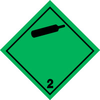 2.2
2.2非易燃无毒气体 2.2
本 UN 可按有限数量运输(一览表额度 120m L);若本票按限量运输,须加贴 LQ 标记并符合第 3.4 章要求
本 UN 可按例外数量运输(代码 E1);若本票按例外数量运输,须加贴 EQ 标记并符合第 3.5 章要求
特殊规定(Special Provisions)
本条目在 IMDG Code 42-24 一览表中未列明特殊规定。
积载与隔离
| 积载与操作 | 积载类D(Category D) |
|---|---|
| 隔离 | 一览表未列明隔离要求 |
同类其他 UN 号
- UN1001 乙炔,溶解的
- UN1002 空气,压缩的
- UN1003 空气,冷冻液体
- UN1005 氨,无水的
- UN1006 氩,压缩的
- UN1008 三氟化硼
- UN1009 溴三氟甲烷(制冷气体, R13B1)
- UN1010 丁二烯类,稳定的或丁二烯和碳氢化合物混合物,稳定的,含丁二烯超过 40%
- UN1011 丁烷
- UN1012 丁烯
- UN1013 二氧化碳
- UN1016 一氧化碳,压缩的
延伸阅读
-
危包证怎么办?船级社证、钢瓶证、SOC 罐证的区别
出口危险货物包装使用鉴定结果单(危包证)的办理逻辑,以及它和船级社证、钢瓶证、SOC 罐证分别在什么场景下用、向谁申请。
-
DG 申请表填写常见错误 TOP 10(附船公司退回原因)
DG 申请表(DGD)被船公司退回,十有八九是这十个问题。逐条列出错误表现、船司退回话术和正确填法。
要出这票货?直接生成 DG 申报资料
按 UN1913 自动带出类别、包装组、隔离要求与危包证清单,省掉翻书对表的时间。
生成 DG 申报资料 →