UN2197 碘化氢,无水的
HYDROGEN IODIDE, ANHYDROUS
基本信息
| UN 编号 | UN2197 |
|---|---|
| 中文名称 | 碘化氢,无水的 |
| 英文名称 | HYDROGEN IODIDE, ANHYDROUS |
| 危险类别 | 第2.3类(副危险 8) |
| 包装类别 | 本条目未划定包装类别 |
| 海洋污染物 | 否 |
| 有限数量 | 0 |
| 例外数量 | E0 |
| EmS 应急措施 | F-C,S-U(F-C, S-U) |
物质性质与外观
带有刺激性气味的、非易燃、 有毒、腐蚀性无色气体。遇水 时有强烈腐蚀性。远比空气重 (4.4)。对皮肤、眼睛和粘膜有 强烈刺激性。
Non-flammable, toxic and corrosive colourless gas with a pungent odour. Highly corrosive in the presence of water. Much heavier than air (4.4). Highly irritating to skin, eyes and mucous membranes.
出处:IMDG Code 42-24 第 670 页
包装要求
本条目适用的包装导则: P200 ;有限数量 0,例外数量 E0。
P200
P200 对于压力容器,须符合第 4.1.6.1 条的一般包装规定。此外,对于多元气体容器,须符合第 4.2.4节的一般规定。 按第 6.2 章规定制造的钢瓶、管状容器、压力桶、钢瓶组件和按第 6.7.5 节规定制造的多元气体容器,允许用于下表列明的指定物质的运输。对于某些物质,其特殊包装规定可能禁止使用特定类型的钢瓶、管状容器、压力桶或钢瓶组。 (1) 按下表规定,装有半致死浓度LC 小于或等于200mL/m3(ppm)的有毒物质的压力容器不得配备任何压力释放装置。用于运输UN 1013二氧化碳和UN 1070一氧化二氮的压力容器须配备压力释放装置。如果使用国家的主管当局有规定,其他压力容器也须配备压力释放装置。压力释放装置的类型、设定的卸压和释放能力(如需要)须由使用国主管当局规定。 (2) 以下三个表格涵盖压缩气体(表1)、液化和溶解气体(表2)及不属于第2类的物质 (表3),其中规定了: (a) 物质的UN编号、正确运输名称和分类; (b) 有毒物质的半致死浓度LC ; (c) 批准用于该物质的压力容器类型,以字母“X”表示; (d) 压力容器定期检验的最长期限; 注:对于使用复合材料的压力容器,其定期检验最长期限为5年。如果经使用国主管当局批准,检验周期可展期至表1和表2中规定的期限(即最长10年)。 (e) 压力容器的最小检验压力; (f) 压缩气体压力容器的最大工作压力(若未给出数值,则工作压力不得超过试验压力的三分之二)或液化气体和溶解气体试验压力的最大充灌率; (g) 特定于某种物质的特殊包装规定。 (3) 在任何情况下,压力容器的充灌量不得超过下述规定的限值: (a) 对于压缩气体,工作压力不得超过压力容器试验压力的三分之二。此工作压力上限由以下(5)款中的特殊包装规定“o”规定。在任何情况下,65℃下的内部压力都不得超过试验压力。 P200 (b) 对于高压液化气体,充灌率须使得65℃下的稳定压力不超过压力容器的试验压力。 允许使用表格以外的试验压力和充灌率,但(5)款中的特殊包装规定“o”适用的情况除外,但前提是: (i) 适用时满足(5)款特殊包装规定“r”的标准;或 (ii) 所有其他情况下均满足上述标准。 对于没有相关数据的高压液化气体和气体混合物,最大充灌率(FR)须按下式确定: FR=8.5×10⁻⁴×d ×P g h 式中,FR为最大充灌率; d 为15℃,1巴时的气体密度(g/L); g P 为最小试验压力(bar)。 h 若气体的密度未知,则最大充灌率FR须按下式确定: P×MM×10-3 FR= h R×338 式中,FR为最大充灌率; P 为最小试验压力(bar); h MM为分子量(g/mol); R为8.31451×10⁻²bar·L/mol·K(气体常数)。 4 对于混合气体,须根据各成份的体积浓度取平均分子量。 (c) 对于低压液化气体,每升水容量中的最大质量(充灌系数)须等于 50℃时液相密度的 0.95 倍;此外,在 60℃以下的任何温度下,液相均不得充满压力容器。 压力容器的试验压力须至少等于 65℃时液体的蒸气压力(绝对值)减去 100kPa(1 巴)。 对于没有相关数据的低压液化气体和气体混合物,最大充灌率须按下式确定: FR=(0.0032×BP-0.24)×d 式中,FR为最大充灌率; BP为沸点(华氏); d 为液体在沸点时的密度(kg/L)。 (d) 对于 UN 1001(溶解乙炔)及 UN 3374(无溶剂乙炔),见(5)款中特殊包装规定“p”。 (e) 对于装有压缩气体的液化气,在计算压力容器内压时,须同时考虑液化气体和压缩气体两种成分。 每升水容量中内容物的最大质量不得超过50℃时液相密度的0.95倍;此外,在60℃ 以下的任何温度下,液相均不得完全充满压力容器。 充满后,65℃时的内部压力不得超过压力容器的试验压力。须考虑压力容器中所有物质的蒸气压和体积膨胀。当无法获得实验数据时,须进行以下步骤: (i) 计算液化气体的蒸气压和15℃(充灌温度)下压缩气体的分压; P200 (ii) 计算从15℃加热至65℃后液相的体积膨胀,并计算气相的剩余体积; (iii) 考虑液相的体积膨胀,计算65℃下压缩气体的分压; 注:须考虑压缩气体在15℃和65℃下的压缩系数。 (iv) 计算液化气体在65℃时的蒸气压; (v) 总压力为液化气体的蒸气压于压缩气体在65℃时的分压之和; (vi) 考虑压缩气体在65℃时在液相中的溶解度; 压力容器的试验压力不得小于计算所得的总压力减去100kPa(1巴)。 如果计算时不知道压缩气体在液相中的溶解度,则可在不考虑气体溶解度(上面第 (vi)款)的情况下计算试验压力。 (4) 压力容器须由有资质的人员使用适当的设备和程序进行充灌。 程序须包括下列检查项: (a) 容器和配件是否符合本《规则》规定; (b) 容器和配件是否与运输产品项兼容; (c) 容器和配件是否存在可能影响安全的损坏; (d) 是否符合充灌度或充灌压力要求(视情而定); (e) 标记和标识。 如果适用下列标准,则视为满足这些要求: ISO 10691:2004 气瓶 - 可重复充灌液化石油气(LPG)的焊接钢瓶 - 充灌前、充灌中和充灌后的检查程序 ISO 11372:2011 气瓶 - 乙炔气瓶 - 充灌条件和充灌检查 ISO 11755:2005 气瓶 - 压缩和液化气体(乙炔除外)的气瓶组 - 充灌时检查 ISO 13088:2011 气瓶 - 乙炔气瓶组 - 充灌条件和充灌检查 +Amd 1:2020 ISO 24431:2016 气瓶 - 压缩和液化气体(乙炔除外)的无缝、焊接和复合气瓶 - 充灌时检查 (5) 特殊包装规定: 材料兼容性 a:不得使用铝合金压力容器。 b:不得使用铜阀门。 c:与内装物接触的金属部件含铜量不得超过65%。 d:当使用钢制压力容器或带钢衬的复合压力容器时,仅允许使用符合第 6.2.2.7.4(p) 条的“H”标记的容器。 半致死浓度LC 小于或等于200 mL/m3(ppm)的有毒物质的要求 k:阀门出口须安装压力保持气密的塞或盖,其螺纹须与阀门出口的螺纹相匹配。 钢瓶组中的每一钢瓶均须安装独立的阀门,运输期间须关闭阀门。 P200 充灌后,须将岐管抽空、吹扫并塞紧。装有UN 1045氟的压缩钢瓶组可在总水容量不超过150 L的钢瓶组上安装隔离阀,而不是在每个钢瓶上安装隔离阀。 钢瓶及钢瓶组中的每个钢瓶的试验压力须大于或等于 200bar,铝合金钢瓶的最小壁厚为 3.5mm,钢质钢瓶的最小壁厚为 2mm。不符合此要求的单个钢瓶须装在坚固的外包装中运输,该外包装须能充分保护钢瓶及其配件,并符合包装类 I 的性能标准。压力桶的最小壁厚须符合主管当局的规定。 压力容器不得安装压力释放装置。 钢瓶及钢瓶组中的每个钢瓶的最大水容量须限制为85 L。 每个阀门须能够承受压力容器的试验压力,并通过锥形螺纹或符合ISO 10692-2:2001 要求的其他方式直接连接到压力容器。 每个阀门要么是无填料形,带有无穿孔隔膜,要么是可防止泄露穿过填料或通过填料泄露的类型。 每个压力容器在充灌后须进行泄露试验。 气体具体规定 l:UN 1040环氧乙烷也可装在密封的玻璃或金属内包装中,并适当加垫在符合包装类I性能标准的纤维板、木箱或金属箱内。任何玻璃内包装的最大允许装载量为 30 g,任何金属内包装的最大允许装载量为 200 g。充灌后,须将每个内包装置于热水槽中进行泄露试验,水温和放置时间须足以确保内包装的内压力等于 55℃时环氧乙烷的蒸气压,以确定其密封性。任何外包装的最大净重不得超过2.5 kg。 m:压力容器的充气压力不得超过5 bar。 n:钢瓶组以及捆绑中的单个钢瓶不得含有超过5kg的气体。当含有UN 1045压缩氟的钢瓶捆按照特殊包装规定“k”分成钢瓶组时,每组不得含有超过5kg的气体。 o:在任何情况下,不得超过表中所示的工作压力或充灌率。 p:对于 UN 1001溶解乙炔和 UN 3374无溶剂乙炔:钢瓶须使用均匀的整体多孔材料充气;工作压力和乙炔数量不得超过批准值或 ISO 3807-1:2000、ISO 3807-2:2000 或 ISO 3807:2013(视情而定)中规定的值。 对于 UN 1001 溶解乙炔:钢瓶须包含许可中规定的丙酮或适当溶剂的数量(见 ISO 3807-1:2000,ISO 3807-2:2000或ISO 3807:2013,视情而定); 装有压力释放装置或歧管在一起的钢瓶须垂直运输。 52bar的试验压力仅适用于装有易熔塞的钢瓶。 q:自燃气体或含有超过 1%的自燃化合物的易燃气体混合物的压力容器阀门出口须装有气密塞或盖。当这些压力容器成捆包装时,每个压力容器须装有单独的阀门,运输过程中须关闭,岐管阀门的出口须装有保压气密塞或盖。气密塞或盖的螺纹须与阀门出口的螺纹相匹配。 r:须限制该气体的充灌率,以便在发生完全分解时,压力不超过压力容器试验压力的三分之二。 ra:该气体也可在下列条件下充入胶囊中: P200 (i) 每个胶囊种气体质量不超过150g; (ii) 胶囊不得存在可能影响强度的缺陷; (iii) 须通过附加装置(盖子、冠部、密封件、绑带等)确保密封件的防漏性,以防止运输过程中封闭件发生任何泄露; (iv) 胶囊须置于具有足够强度的外包装中。包件重量不超过75kg。 s:铝合金压力容器须: - 仅配备铜质或不锈钢质阀门;和 - 按ISO 11621:1997进行清洁,不得受到油类污染。 t: (i) 压力容器的壁厚不得小于3mm。 (ii) 运输前,须确保压力不会因潜在的氢气产生而升高。 定期检验 u: 当压力容器的合金按ISO 7866:2012+Cor 1:2014的规定进行应力腐蚀试验时,铝合金压力容器的定期检验间隔可延长至10年。 v: 如果经使用国主管当局批准,钢瓶的定期检验间隔可延长至15年。 对未另列明物质描述和混合物的要求 z: 压力容器及其附件的制造材料须与内装物相容,不得与其发生反应而形成有害或危险化合物。 试验压力和充灌率须按(3)的规定进行计算。 半致死浓度 LC 小于或等于 200mL/m3的有毒物质不得以管状容器、压力桶或多单元气体容器运输,并须满足特殊包装规定“k”的要求。但是,UN 1975 一氧化氮和四氧化二氮混合物可用压力桶运输。 对于装有自燃气体或含有超过 1%自燃化合物的易燃气体混合物的压力容器,须满足特殊包装规定“q”的要求。 须采取必要措施防止运输过程中发生危险反应(即聚合或分解)。若有必要,须要求采取稳定处理或添加抑制剂。 含有 UN 1911 乙硼烷的混合物须充灌到一定压力,以防乙硼烷完全分解,压力容器的试验压力不得超过三分之二。 含有 UN 2192 锗烷的混合物(除在氢气或氮气中含量高达 35% 的锗烷混合物或在氦气或氩气中含量高达 28% 的锗烷混合物外),须充灌到一定压力,以防锗烷完全分解,压力容器的试验压力不得超过三分之二。 氟浓度低于 35%(体积百分比)的氟和氮混合物可以充灌到压力容器中,最高允许工作压力为 31 bar(绝对值)。 工作压力 (𝑏𝑎𝑟) < −1 𝑋𝑓 其中 X = 氟浓度(体积百分比)/100。 f 氟浓度低于 35%(体积百分比)的氟和惰性气体混合物可以充灌到压力容器中, 最高允许工作压力为 31 bar(绝对值),在计算分压时,还须考虑符合 ISO P200 10156:2017 的氮当量系数。 工作压力 (𝑏𝑎𝑟)< (𝑋 +𝐾 +𝐾)−1 𝑓 𝑘 𝐾 𝑋𝑓 其中X= 氟浓度(体积百分比)/100; f K = 惰性气体相对于氮的当量系数(氮当量系数); k X = 惰性气体浓度(体积百分比)/100。 k 但是,氟和惰性气体混合物的工作压力不得超过 200 bar。氟和惰性气体混合物压力容器的最低试验压力等于工作压力的 1.5 倍或 200 bar,取较大值。 P200 表1:压缩气体 UN 正确运输名称分副危钢管状压力钢瓶多单试验试验最大特殊 NO. 类险性 3 m 瓶容器桶组元气周期压力工作包装 / L 体容 (巴)*压力规定 0, C 器 (巴) L) 1002 空气,压缩的 2.2 × × × × × 10 1006 氩,压缩的 2.2 × × × × × 10 4 1016 一氧化碳,压缩的 2.3 2.1 3,760 × × × × × 5 u 1023 煤气,压缩的 2.3 2.1 × × × × × 5 a,k, 1045 氟,压缩的 2.3 5.1,8 185 × × 5 200 30 n,o 1046 氦气,压缩的 2.2 × × × × × 10 1049 氢气,压缩的 2.1 × × × × × 10 d 1056 氪,压缩的 2.2 × × × × × 10 1065 氖,压缩的 2.2 × × × × × 10 1066 氮气,压缩的 2.2 × × × × × 10 1071 油气,压缩的 2.3 2.1 × × × × × 5 1072 氧气,压缩的 2.2 5.1 × × × × × 10 s 四磷酸六乙酯和压缩气体 1612 2.3 × × × × 5 z 混合物 1660 一氧化氮,压缩的 2.3 5.1,8 115 × × 5 225 33 k,o 压缩气体,有毒的,易燃 ≤5,00 1953 2.3 2.1 × × × × × 5 z 的,未另列明的 0 压缩气体,易燃的,未另 1954 2.1 × × × × × 10 z 列明的压缩气体,有毒的,未另 ≤5,00 1955 2.3 × × × × × 5 z 列明的 0 1956 压缩气体,未另列明的 2.2 × × × × × 10 z 1957 氘,压缩的 2.1 × × × × × 10 d 烃类气体混合物,压缩 1964 2.1 × × × × × 10 z 的,未另列明的甲烷,压缩的或天然气, 1971 2.1 × × × × × 10 压缩的(甲烷含量高) 氢气和甲烷混合物,压缩 2034 2.1 × × × × × 10 d 的 a,k, 2190 二氟化氧,压缩的 2.3 5.1,8 2.6 × × 5 200 30 n,o 压缩气体,氧化性,未另 3156 2.2 5.1 × × × × × 10 z 列明的压缩气体,有毒的,氧化 ≤5,00 3303 2.3 5.1 × × × × × 5 z 性,未另列明的 0 压缩气体,有毒的,腐蚀 ≤5,00 3304 2.3 8 × × × × × 5 z 性,未另列明的 0 压缩气体,有毒的,易燃 ≤5,00 3305 2.3 2.1,8 × × × × × 5 z 的,腐蚀的,未另列明的 0 压缩气体,有毒的,氧化 ≤5,00 3306 2.3 2.1,8 × × × × × 5 z 性,腐蚀的,未另列明的 0 * 若此条目为空,最大工作压力不得超过试验压力的2/3。 (续) P200 表2:液化气体和可溶气体分副危 3 钢管压钢多试试验最大特 m / 类险性 L 瓶状力瓶单验压力工作殊 m,0 容桶组元周 (巴*) 压力包 C UN 正确运输名称 L 器气期 (巴) 装 NO. 体 (年) 规容定器 1001 乙炔,溶解的 2.1 × × 10 60, c,p 1005 氨,无水的 2.3 8 4,000 × × × × × 5 29 0.54 b 1008 三氟化硼 2.3 8 387 × × × × × 5 225 0.71 a (续) P200 表2:液化气体和可溶气体分副危 3 钢管压钢多试试验最大特 m / 类险性 L 瓶状力瓶单验压力工作殊 m,0 容桶组元周 (巴*) 压力包 C UN 正确运输名称 L 器气期 (巴) 装 NO. 体 (年) 规容定器 0.86 1009 溴三氟甲烷(制冷气体 R 2.2 × × × × × 10 42 1.13 13B1) 120 1.44 1.60 1010 丁二烯类,稳定的(1,2-丁 2.1 × × × × × 10 10 0.59 二烯),或 1010 丁二烯类,稳定的(1,3-丁 2.1 × × × × × 10 10 0.55 二烯),或 1010 丁二烯和烃类的混合物,稳 2.1 × × × × × 10 v,z 定的(含有大于 40%的丁二烯) 1011 丁烷 2.1 × × × × × 10 10 0.52 v 1012 丁烯(丁烯类混合物)或 2.1 × × × × × 10 10 0.50 z 1012 丁烯(1-丁烯)或 2.1 × × × × × 10 10 0.53 1012 丁烯(顺-2-丁烯) 2.1 × × × × × 10 10 0.55 1012 丁烯(反-2-丁烯) 2.1 × × × × × 10 10 0.54 1013 二氧化碳 2.2 × × × × × 10 190 0.68 0.76 1017 氯气 2.3 5.1,8 293 × × × × × 5 22 1.25 a 1018 氯二氟甲烷(制冷气体 R 2.2 × × × × × 10 27 1.03 22) 1020 氯五氟乙烷(制冷气体 R 2.2 × × × × × 10 25 1.05 115) 1021 1-氯-1,2,2,2-四氟乙烷(制 2.2 × × × × × 10 11 1.20 冷气体R 124) 1022 氯三氟甲烷(制冷气体 R 2.2 × × × × × 10 100 0.83 13) 120 0.90 1.04 (续) P200 表2:液化气体和可溶气体分副危 3 钢管压钢多试试验最大特 m / 类险性 L 瓶状力瓶单验压力工作殊 m,0 容桶组元周 (巴*) 压力包 C UN 正确运输名称 L 器气期 (巴) 装 NO. 体 (年) 规容定器 1.11 1026 氰 2.3 2.1 350 × × × × × 5 100 0.70 u 1027 环丙烷 2.1 × × × × × 10 18 0.55 1028 二氯二氟甲烷(制冷气体R 2.2 × × × × × 10 16 1.15 12) 1029 二氯一氟甲烷(制冷气体R 2.2 × × × × × 10 10 1.23 21) 1030 1,1-二氟乙烷(制冷气体 R 2.1 × × × × × 10 16 0.79 152a) 1032 二甲胺,无水的 2.1 × × × × × 10 10 0.59 b 1033 二甲醚 2.1 × × × × × 10 18 0.58 1035 乙烷 2.1 × × × × × 10 95 0.25 0.30 0.40 1036 乙胺 2.1 × × × × × 10 10 0.61 b 1037 氯乙烷(乙基氯) 2.1 × × × × × 10 10 0.80 a 1039 乙基甲基醚(甲乙醚) 2.1 × × × × × 10 10 0.64 1040 环氧乙烷,或含氮的环氧 2.3 2.1 2900 × × × × × 5 15 0.78 1 乙烷(在50℃最高总压力不超过1MPa (10bar)) 1041 环氧乙烷和二氧化碳的混 2.1 × × × × × 10 190 0.66 合物(含有环氧乙烷 9%以 250 0.75 上但不超过87%) 1043 充氨溶液肥料(含游离 2.2 × × × 5 b,z 氮) 1048 溴化氢,无水的 2.3 8 2860 × × × × × 5 60 1.51 a,d 1050 氯化氢,无水的 2.3 8 2810 × × × × × 5 100 0.30 a,d 0.56 a,d (续) P200 表2:液化气体和可溶气体分副危 3 钢管压钢多试试验最大特 m / 类险性 L 瓶状力瓶单验压力工作殊 m,0 容桶组元周 (巴*) 压力包 C UN 正确运输名称 L 器气期 (巴) 装 NO. 体 (年) 规容定器 0.67 a,d 0.74 a,d 1053 硫化氢 2.3 2.1 712 × × × × × 5 48 0.67 d,u 1055 异丁烯 2.1 × × × × × 10 10 0.52 1058 液化气体,非易燃的(充 2.2 × × × × × 10 z 有氮气、二氧化碳或空气) 1060 甲基乙炔和丙二烯混合 2.1 × × × × × 10 c,z 物,稳定的或 1060 甲基乙炔和丙二烯混合 2.1 × × × × × 10 22 0.52 c 物,稳定的(丙二烯中含 1%~4%的甲基乙炔) 1061 甲胺,无水的 2.1 × × × × × 10 13 0.58 b 1062 溴甲烷(甲基溴)(含三氯 2.3 850 × × × × × 5 10 1.51 a 硝基甲烷少于2%) 1063 氯甲烷(甲基氯)(制冷气 2.1 × × × × × 10 17 0.81 a 体,R 40) 1064 甲硫醇 2.3 2.1 1350 × × × × × 5 10 0.78 d,u 1067 四氧化二氮(二氧化氮) 2.3 5.1,8 115 × × × 5 10 1.30 k 1069 氯化亚硝酰 2.3 8 35 × × 5 13 1.10 k 1070 一氧化二氮 2.2 5.1 × × × × × 10 180 0.68 0.74 0.75 1075 石油气,液态的 2.1 × × × × × 10 v,z 1076 光气(碳酰氯) 2.3 8 5 × × × 5 20 1.23 a,k 1077 丙烯 2.1 × × × × × 10 27 0.43 1078 制冷气体,未另列明的 2.2 × × × × × 10 z 1079 二氧化硫 2.3 8 2520 × × × × × 5 12 1.23 (续) P200 表2:液化气体和可溶气体分副危 3 钢管压钢多试试验最大特 m / 类险性 L 瓶状力瓶单验压力工作殊 m,0 容桶组元周 (巴*) 压力包 C UN 正确运输名称 L 器气期 (巴) 装 NO. 体 (年) 规容定器 1080 六氧化硫 2.2 × × × × × 10 70 1.06 1.34 1.38 1081 四氟乙烯,稳定的 2.1 × × × × × 10 200 m,o 1082 三氟氯乙烯,稳定的(制 2.3 2.1 2000 × × × × × 5 19 1.13 u 冷气体R 1113) 1083 三甲胺,无水的 2.1 × × × × × 10 10 0.56 b 1085 乙烯基溴,稳定的 2.1 × × × × × 10 10 1.37 a 1086 乙烯基氯,稳定的 2.1 × × × × × 10 12 0. 81 a 1087 乙烯基甲基醚,稳定的 2.1 × × × × × 10 10 0.67 1581 三氯硝基甲烷和甲基溴混 2.3 850 × × × × × 5 10 1.51 a 合物(含有大于 2%的三氯硝基甲烷) 1582 三氯硝基甲烷和甲基溴混 2.3 × × × × × 5 17 0.81 a 合物 1589 氯化氰,稳定的 2.3 8 80 × × 5 20 1.03 k 1741 三氯化硼 2.3 8 2541 × × × × × 5 10 1.19 a 1749 三氟化氯 2.3 5.1,8 299 × × × × × 5 30 1.40 a 1858 六氟丙烯(制冷气体,R 2.2 × × × × × 10 22 1.11 1216) 1859 四氟化硅 2.3 8 922 × × × × × 5 200 0.74 a 1.10 1860 乙烯基氟,稳定的 2.1 × × × × × 10 250 0.64 a 1911 乙硼烷(二硼烷) 2.3 2.1 80 × × 5 250 0.07 d,k,o 1912 氯甲烷和二氯甲烷混合物 2.1 × × × × × 10 17 0.81 a (续) P200 表2:液化气体和可溶气体分副危 3 钢管压钢多试试验最大特 m / 类险性 L 瓶状力瓶单验压力工作殊 m,0 容桶组元周 (巴*) 压力包 C UN 正确运输名称 L 器气期 (巴) 装 NO. 体 (年) 规容定器 1952 环氧乙烷和二氧化碳混合 2.2 × × × × × 10 190 0.66 物(含环氧乙烷不超过 250 0.75 9%) 1958 1,2-二氯-1,1,2,2-四氟乙烷 2.2 × × × × × 10 10 1.30 (制冷气体R 114) 1959 1,1-二氟乙烯(制冷气体 R 2.1 × × × × × 10 250 0.77 1132a) 1962 乙烯 2.1 × × × × × 10 255 0.34 0.38 1965 烃类气体混合物,液体 2.1 × × × × × 10 v,z 的、未另列明的 1967 气体杀虫剂,有毒的、未 2.3 × × × × × 5 z 另列明的 1968 气体杀虫剂,未另列明的 2.2 × × × × × 10 z 1969 异丁烷 2.1 × × × × × 10 10 0.49 v 1973 氯二氟甲烷和氯五氟乙烷 2.2 × × × × × 10 31 1.01 混合物(具有固定沸点, 含氯二氟甲烷约 49%)(制冷气体R 502) 1974 氯二氟溴甲烷(制冷气体R 2.2 × × × × 10 10 1.61 12B1) 1975 一氧化氮和四氧化二氮混 2.3 5.1,8 115 × × × 5 k,z 合物(一氧化氮和二氧化氮混合物) 1976 八氟环丁烷(制冷气体 RC 2.2 × × × × × 10 11 1.32 318) 1978 丙烷 2.1 × × × × × 10 23 0.43 v (续) P200 表2:液化气体和可溶气体分副危 3 钢管压钢多试试验最大特 m / 类险性 L 瓶状力瓶单验压力工作殊 m,0 容桶组元周 (巴*) 压力包 C UN 正确运输名称 L 器气期 (巴) 装 NO. 体 (年) 规容定器 1982 四氟甲烷(制冷气体 R 2.2 × × × × × 10 200 0.71 14) 300 0.90 1983 1-氯-2,2,2-三氟乙烷(制冷 2.2 × × × × × 10 10 1.18 气体R 133a) 1984 三氟甲烷(制冷气体 R 2.2 × × × × × 10 190 0.88 23) 250 0.96 2035 1,1,1-三氟乙烷(制冷气体 2.1 × × × × × 10 35 0.73 R143a) 2036 氙 2.2 × × × × × 10 130 1.28 2044 2,2-二甲基丙烷 2.1 × × × × × 10 10 0.53 2073 氨溶液(15℃时水溶液相 2.2 对密度低于0.880) 含氨35%~40% × × × × × 5 10 0.80 B 含氨40%~50% × × × × × 5 12 0.77 b 2188 胂(砷化三氢) 2.3 2.1 178 × × 5 42 1.10 d,k 2189 二氯硅烷 2.3 2.1,8 314 × × × × × 5 10 0.90 a 1.08 2191 硫酰氟 2.3 3020 × × × × × 5 50 1.10 u 2192 锗烷(氢化锗) 2.3 2.1 620 × × × × × 5 250 0.06 d,q, r 2193 六氟乙烷(制冷气体 R 2.2 × × × × × 10 200 1.13 116) 2194 六氟化硒 2.3 8 50 × × 5 36 1.46 k 2195 六氟化碲 2.3 8 25 × × 5 20 1.00 k 2196 六氟化钨 2.3 8 160 × × 5 10 3.08 a,k 2197 碘化氢,无水的 2.3 8 2860 × × × × × 5 23 2.25 a,d 2198 五氟化磷 2.3 8 190 × × 5 200 0.90 k 1.25 k (续) P200 表2:液化气体和可溶气体分副危 3 钢管压钢多试试验最大特 m / 类险性 L 瓶状力瓶单验压力工作殊 m,0 容桶组元周 (巴*) 压力包 C UN 正确运输名称 L 器气期 (巴) 装 NO. 体 (年) 规容定器 2199 膦(磷化氢) 2.3 2.1 20 × × 5 225 0.30 d,k, 0.45 q d,k, q 2200 丙二烯,稳定的 2.1 × × × × × 10 22 0.50 2202 硒化氢,无水的 2.3 2.1 51 × × 5 31 1.60 k 2203 硅烷 2.1 × × × × × 10 225 0.32 q 0.36 q 2204 硫化羰 2.3 2.1 1700 × × × × × 5 30 0.87 u 2417 碳酰氟 2.3 8 360 × × × × × 5 200 0.47 0.70 2418 四氟化硫 2.3 8 40 × × 5 30 0.91 k,a 2419 溴三氟乙烯 2.1 × × × × × 10 10 1.19 2420 六氟丙酮 2.3 8 470 × × × × × 5 22 1.08 2421 三氧化氮 2.3 5.1,8 57 × × 5 k 2422 八氟-2-丁烯(制冷气体 R 2.2 × × × × × 10 12 1.34 1318) 2424 八氟丙烷(制冷气体 R 2.2 × × × × × 10 25 1.04 218) 2451 三氟化氮 2.2 5.1 × × × × × 10 200 0.50 2452 乙基乙炔,稳定的 2.1 × × × × × 10 10 0.57 c 2453 氟乙烷(乙基氟)(制冷气 2.1 × × × × × 10 30 0.57 体R 161) 2454 氟甲烷(甲基氟)(制冷所 2.1 × × × × × 10 300 0.63 体R 41) 2455 亚硝酸甲酯 2.2 (见特殊规定900) 2517 1-氯-1,1-二氟乙烷(制冷气 2.1 × × × × × 10 10 0.99 体R 142b) (续) P200 表2:液化气体和可溶气体分副危 3 钢管压钢多试试验最大特 m / 类险性 L 瓶状力瓶单验压力工作殊 m,0 容桶组元周 (巴*) 压力包 C UN 正确运输名称 L 器气期 (巴) 装 NO. 体 (年) 规容定器 2534 甲基氯硅烷 2.3 2.1,8 2,810 × × × × × 5 z 2548 五氟化氯 2.3 5.1,8 122 × × 5 13 1.49 a,k 2599 氯三氟甲烷和三氟甲烷共 2.2 × × × × × 10 31 0.12 沸混合物(含氯三氟甲烷 42 0.17 约 60%)(制冷气体 R 100 0.64 503) 2601 环丁烷 2.1 × × × × × 10 10 0.63 2602 二氯二氟甲烷和二氟乙烷 2.2 × × × × × 10 22 1.01 共沸混合物(含二氯二氟甲烷约 74%)(制冷气体 R 500) 2676 锑化(三)氢 2.3 2.1 178 × × 5 200 0.49 k,r 2901 氯化溴 2.3 5.1,8 290 × × × × × 5 10 1.50 a 3057 三氟乙酰氯 2.3 8 10 × × × 5 17 1.17 k 3070 环氧乙烷和二氯二氟甲烷 2.2 × × × × × 10 18 1.09 混合物(含环氧乙烷不超过12.5%) 3083 高氯酰氟 2.3 5.1 770 × × × × × 5 33 1.21 u 3153 全氟(甲基乙烯基醚) 2.1 × × × × × 10 20 0.75 3154 全氟(乙基乙烯基醚) 2.1 × × × × × 10 10 0.98 3157 液化气体,氧化性、未另 2.2 5.1 × × × × × 10 z 列明的 3159 1,1,1,2-四氟乙烷(制冷气 2.2 × × × × × 10 18 1.05 体R 134a) 3160 液化气体,有毒的、易燃 2.3 2.1 ≤5000 × × × × × 5 z 的、未另列明的 3161 液化气体,易燃的、未另 2.1 × × × × × 10 z 列明的 (续) P200 表2:液化气体和可溶气体分副危 3 钢管压钢多试试验最大特 m / 类险性 L 瓶状力瓶单验压力工作殊 m,0 容桶组元周 (巴*) 压力包 C UN 正确运输名称 L 器气期 (巴) 装 NO. 体 (年) 规容定器 3162 液化气体,有毒的、未另 2.3 ≤500 × × × × × 5 Z 列明的 0 3163 液化气体,未另列明的 2.2 × × × × × 10 z 3220 五氟乙烷(制冷气体 R 2.2 × × × × × 10 49 0.95 125) 35 0.87 3252 二氟甲烷(制冷气体 R 2.1 × × × × × 10 48 0.78 32) 3296 七氟丙烷(制冷气体 R 2.2 × × × × × 10 13 1.21 227) 3297 环氧乙烷和氯四氟乙烷混 2.2 × × × × × 10 10 1.16 合物(含环氧乙烷不超过 8.8%) 3298 环氧乙烷和五氟乙烷混合 2.2 × × × × × 10 26 1.02 物(含环氧乙烷不超过 7.9%) 3299 环氧乙烷和四氟乙烷混合 2.2 × × × × × 10 17 1.03 物(含环氧乙烷不超过 5.6%) 3300 环氧乙烷和二氧化碳混合 2.3 2.1 >2900 × × × × × 5 28 0.73 物 (含环氧乙烷超过 87%) 3307 液化气体,有毒的、氧化 2.3 5.1 ≤5000 × × × × × 5 z 性、未另列明的 3308 液化气体,有毒的、腐蚀 2.3 8 ≤5000 × × × × × 5 z 的、未另列明的 3309 液化气体,有毒的、易燃 2.3 2.1,8 ≤5000 × × × × × 5 z 的、腐蚀的、未另列明的 (续) P200 表2:液化气体和可溶气体分副危 3 钢管压钢多试试验最大特 m / 类险性 L 瓶状力瓶单验压力工作殊 m,0 容桶组元周 (巴*) 压力包 C UN 正确运输名称 L 器气期 (巴) 装 NO. 体 (年) 规容定器 3310 液化气体,有毒的、氧化 2.3 5.1,8 ≤5000 × × × × × 5 z 性、腐蚀的、未另列明的 3318 氨溶液(水溶液在 15℃时 2.3 8 × × × × 5 b 相对密度小于 0.880,含氨量大于50%) 3337 制冷气体R 404A 2.2 × × × × × 10 36 0.82 3338 制冷气体R 407A 2.2 × × × × × 10 32 0.94 3339 制冷气体R 407B 2.2 × × × × × 10 33 0.93 3340 制冷气体R 407C 2.2 × × × × × 10 30 0.95 3354 气体杀虫剂,易燃的、未 2.1 × × × × × 10 z 另列明的 3355 气体杀虫剂,有毒的、易 2.3 2.1 × × × × × 5 z 燃的、未另列明的 3374 乙炔,无溶剂 2.1 × × 5 60 c,p 1051 氰化氢稳定的,含水低于 6.1 3 40 × × 5 100 k 0.55 3% 1052 氟化氢,无水的 8 6.1 966 × × × 5 10 0.84 a,t 1745 五氟化溴 5.1 6.1,8 25 × × × 5 10 * k 1746 三氟化溴 5.1 6.1,8 50 × × × 5 10 * k 2495 五氟化碘 5.1 6.1,8 120 × × × 5 10 * k * 若此条目为空,最大工作压力不得超过试验压力的2/3。 *要求至少有8%的容积膨胀余位。
P200 For pressure receptacles, the general packing provisions of 4.1.6.1 shall be met. In addition, for MEGCs, the general requirements of 4.2.4 shall be met. Cylinders, tubes, pressure drums, bundles of cylinders constructed as specified in 6.2 and MEGCs constructed as specified in 6.7.5 are authorized for the transport of a specific substance when specified in the following tables. For some substances, the special packing provisions may prohibit a particular type of cylinder, tube, pressure drum or bundle of cylinders. (1) Pressure receptacles containing toxic substances with an LC less than or equal to 200 mL m3 (ppm) as / specified in the table shall not be equipped with any pressure relief device. Pressure relief devices shall be fitted on pressure receptacles used for the transport of UN 1013 carbon dioxide and UN 1070 nitrous oxide. Other pressure receptacles shall be fitted with a pressure relief device if specified by the competent authority of the country of use. The type of pressure relief device, the set-to-discharge pressure and relief capacity of pressure relief devices, if required, shall be specified by the competent authority of the country of use. (2) The following three tables cover compressed gases (Table 1), liquefied and dissolved gases (Table 2) and substances not in Class 2 (Table 3). They provide: (a) The UN number, proper shipping name and classification of the substance; (b) The LC for toxic substances; (c) The types of pressure receptacles authorized for the substance, shown by the letter “X”; (d) The maximum test period for periodic inspection of the pressure receptacles. Note: For pressure receptacles which make use of composite materials, the maximum test period shall be years. The test period may be extended to that specified in Tables 1 and 2 (i.e. up to 10 years), if approved by the competent authority of the country of use. (e) The minimum test pressure of the pressure receptacles; (f) The maximum working pressure of the pressure receptacles for compressed gases (where no value is given, the working pressure shall not exceed two thirds of the test pressure) or the maximum filling ratio(s) dependent on the test pressure(s) for liquefied and dissolved gases; (g) Special packing provisions that are specific to a substance. (3) In no case shall pressure receptacles be filled in excess of the limit permitted in the following requirements. (a) For compressed gases, the working pressure shall be not more than two thirds of the test pressure of the pressure receptacles. Restrictions to this upper limit on working pressure are imposed by special packing provision “o” in (5) below. In no case shall the internal pressure at 65C exceed the test pressure. ° (b) For high pressure liquefied gases, the filling ratio shall be such that the settled pressure at 65C does not ° exceed the test pressure of the pressure receptacles. The use of test pressures and filling ratios other than those in the table is permitted, except where (5), special packing provision “o” applies, provided that: (i) the criterion of (5), special packing provision “r” is met when applicable; or (ii) the above criterion is met in all other cases. For high pressure liquefied gases and gas mixtures for which relevant data are not available, the maximum filling ratio (FR) shall be determined as follows: FR = 8.5 × -4 × d g × P h where FR maximum filling ratio = d gas density (at 15C, 1 bar) (in g L) g = ° / P minimum test pressure (in bar) h = If the density of the gas is unknown, the maximum filling ratio shall be determined as follows: FR = _ P _ h _ × _ R _ M _ M _ 3 _ × 3 _ 8 _ 1 _ 0 _ - _ 3 where FR maximum filling ratio × = P minimum test pressure (in bar) h = MM molecular mass (in g mol) = / R = 8.31451 × 10⁻² bar · L / mol · K (gas constant) For gas mixtures, the average molecular mass is to be taken, taking into account the volumetric concentrations of the various components. (c) For low pressure liquefied gases, the maximum mass of contents per litre of water capacity shall equal 0.95 times the density of the liquid phase at 50C; in addition, the liquid phase shall not fill the pressure ° receptacle at any temperature up to 60C. The test pressure of the pressure receptacle shall be at least equal ° to the vapour pressure (absolute) of the liquid at 65C, minus 100 kPa (1 bar). ° For low pressure liquefied gases and gas mixtures for which relevant data are not available, the maximum filling ratio shall be determined as follows: FR (0.0032 BP 0.24) d = × – × l where FR maximum filling ratio = BP boiling point (in kelvin) = d density of the liquid at boiling point (in kg/L) l = (d) For UN 1001, acetylene, dissolved, and UN 3374 acetylene, solvent free, see (5), special packing provision “p”. (continued) P200 (e) For liquefied gases charged with compressed gases, both components – the liquefied gas and the compressed gas – have to be taken into consideration in the calculation of the internal pressure in the pressure receptacle. The maximum mass of contents per litre of water capacity shall not exceed 0.95 times the density of the liquid phase at 50°C; in addition, the liquid phase shall not completely fill the pressure receptacle at any temperature up to 60°C. When filled, the internal pressure at 65°C shall not exceed the test pressure of the pressure receptacles. The vapour pressures and volumetric expansions of all substances in the pressure receptacles shall be considered. When experimental data is not available, the following steps shall be carried out: (i) calculation of the vapour pressure of the liquefied gas and of the partial pressure of the compressed gas at 15°C (filling temperature); (ii) calculation of the volumetric expansion of the liquid phase resulting from the heating from 15°C to 65°C and calculation of the remaining volume for the gaseous phase; (iii) calculation of the partial pressure of the compressed gas at 65°C considering the volumetric expansion of the liquid phase; Note: The compressibility factor of the compressed gas at 15°C and 65°C shall be considered. (iv) calculation of the vapour pressure of the liquefied gas at 65°C; (v) the total pressure is the sum of the vapour pressure of the liquefied gas and the partial pressure of the compressed gas at 65°C; (vi) consideration of the solubility of the compressed gas at 65°C in the liquid phase. The test pressure of the pressure receptacle shall not be less than the calculated total pressure minus kPa (1bar). If the solubility of the compressed gas in the liquid phase is not known for the calculation, the test pressure can be calculated without taking the gas solubility (subparagraph (vi)) into account. (4) The filling of pressure receptacles shall be carried out by qualified staff using appropriate equipment and procedures. The procedures should include checks of: (a) the conformity of receptacles and accessories with the provisions of this Code; (b) their compatibility with the product to be transported; (c) the absence of damage which might affect safety; (d) compliance with the degree or pressure of filling, as appropriate; (e) marks and identification. These requirements are deemed to be met if the following standards are applied: ISO 10691:2004 Gas cylinders – Refillable welded steel cylinders for liquefied petroleum gas (LPG) – Procedures for checking before, during and after filling. ISO 11372:2011 Gas cylinders – Acetylene cylinders – Filling conditions and filling inspection ISO 11755:2005 Gas cylinders – Cylinder bundles for compressed and liquefied gases (excluding acetylene) – Inspection at time of filling ISO 13088:2011 Gas cylinders – Acetylene cylinder bundles – Filling conditions and filling inspection Amd 1:2020 + ISO 24431:2016 Gas cylinders – Seamless, welded and composite cylinders for compressed and liquefied gases (excluding acetylene) – Inspection at time of filling (5) Special packing provisions: Material compatibility a: Aluminium alloy pressure receptacles shall not be used. b: Copper valves shall not be used. c: Metal parts in contact with the contents shall not contain more than 65% copper. d: When steel pressure receptacles or composite pressure receptacles with steel liners are used, only those bearing the "H" mark in accordance with 6.2.2.7.4 (p) are permitted. Requirements for toxic substances with an LC less than or equal to 200 mL m3 (ppm) / k: Valve outlets shall be fitted with pressure-retaining gas-tight plugs or caps having threads that match those of the valve outlets. Each cylinder within a bundle shall be fitted with an individual valve that shall be closed during transport. After filling, the manifold shall be evacuated, purged and plugged. Bundles containing UN 1045 fluorine, compressed, may be constructed with isolation valves on groups of cylinders not exceeding 150 L total water capacity instead of isolation valves on every cylinder. Cylinders and individual cylinders in a bundle shall have a test pressure greater than or equal to 200 bar and a minimum wall thickness of 3.5 mm for aluminium alloy or 2 mm for steel. Individual cylinders not complying with this requirement shall be transported in a rigid outer packaging that will adequately protect the cylinder and its fittings and meeting the packing group I performance level. Pressure drums shall have a minimum wall thickness as specified by the competent authority. Pressure receptacles shall not be fitted with a pressure relief device. Cylinders and individual cylinders in a bundle shall be limited to a maximum water capacity of 85 L. Each valve shall be capable of withstanding the test pressure of the pressure receptacle and be connected directly to the pressure receptacle by either a taper thread or other means which meets the requirements of ISO 10692-2:2001. (continued) P200 Each valve shall either be of the packless type with non-perforated diaphragm, or be of a type which prevents leakage through or past the packing. Each pressure receptacle shall be tested for leakage after filling. Gas specific provisions l: UN 1040 ethylene oxide may also be packed in hermetically sealed glass or metal inner packagings suitably cushioned in fibreboard, wooden or metal boxes meeting the packing group I performance level. The maximum quantity permitted in any glass inner packaging is 30 g, and the maximum quantity permitted in any metal inner packaging is 200 g. After filling, each inner packaging shall be determined to be leaktight by placing the inner packaging in a hot water bath at a temperature, and for a period of time, sufficient to ensure that an internal pressure equal to the vapour pressure of ethylene oxide at 55C is ° achieved. The maximum net mass in any outer packaging shall not exceed 2.5 kg. m: Pressure receptacles shall be filled to a working pressure not exceeding 5 bar. n: Cylinders and individual cylinders in a bundle shall contain not more than 5 kg of the gas. When bundles containing UN 1045 fluorine, compressed are divided into groups of cylinders in accordance with special packing provision “k” each group shall contain not more than 5 kg of the gas. o: In no case shall the working pressure or filling ratio shown in the table be exceeded. p: For UN 1001 acetylene, dissolved and UN 3374 acetylene, solvent free: cylinders shall be filled with a homogeneous monolithic porous material; the working pressure and the quantity of acetylene shall not exceed the values prescribed in the approval or in ISO 3807-1:2000, ISO 3807-2:2000 or ISO 3807:2013, as applicable. For UN 1001 acetylene, dissolved: cylinders shall contain a quantity of acetone or suitable solvent as specified in the approval (see ISO 3807-1:2000, ISO 3807-2:2000 or ISO 3807:2013, as applicable); cylinders fitted with pressure relief devices or manifolded together shall be transported vertically. The test pressure of 52 bar applies only to cylinders fitted with a fusible plug. q: Valve outlets of pressure receptacles for pyrophoric gases or flammable mixtures of gases containing more than 1% of pyrophoric compounds shall be fitted with gas-tight plugs or caps. When these pressure receptacles are manifolded in a bundle, each of the pressure receptacles shall be fitted with an individual valve that shall be closed during transport, and the outlet of the manifold valve shall be fitted with a pressure-retaining gas-tight plug or cap. Gas-tight plugs or caps shall have threads that match those of the valve outlets. r: The filling ratio of this gas shall be limited such that, if complete decomposition occurs, the pressure does not exceed two thirds of the test pressure of the pressure receptacle. ra: This gas may also be packed in capsules under the following conditions: (i) The mass of gas shall not exceed 150 g per capsule; (ii) The capsules shall be free from faults liable to impair the strength; (iii) T he leakproofness of the closure shall be ensured by an additional device (cap, crown, seal, binding, etc.) capable of preventing any leakage of the closure during transport; (iv) T he capsules shall be placed in an outer packaging of sufficient strength. A package shall not weigh more than 75 kg. s: Aluminium alloy pressure receptacles shall be: (a) equipped only with brass or stainless steel valves; and (b) cleaned in accordance with ISO 11621:1997 and not contaminated with oil. t: (a) The wall thickness of pressure receptacles shall be not less than 3 mm. (b) P rior to transport, it shall be ensured that the pressure has not risen due to potential hydrogen generation. Periodic inspection u: The interval between periodic tests may be extended to 10 years for aluminium alloy pressure receptacles when the alloy of the pressure receptacle has been subjected to stress corrosion testing as specified in ISO 7866:2012 + Cor 1:2014. v: The interval between periodic inspections for steel cylinders may be extended to 15 years if approved by the competent authority of the country of use. Requirements for N.O.S. descriptions and for mixtures z: The construction materials of the pressure receptacles and their accessories shall be compatible with the contents and shall not react to form harmful or dangerous compounds therewith. The test pressure and filling ratio shall be calculated in accordance with the relevant requirements of (3). Toxic substances with an LC less than or equal to 200 mL m3 shall not be transported in tubes, / pressure drums or MEGCs and shall meet the requirements of special packing provision “k”. However, UN 1975 nitric oxide and dinitrogen tetroxide mixtures may be transported in pressure drums. For pressure receptacles containing pyrophoric gases or flammable mixtures of gases containing more than 1% pyrophoric compounds, the requirements of special packing provision “q” shall be met. The necessary steps shall be taken to prevent dangerous reactions (i.e. polymerization or decomposition) during transport. If necessary, stabilization or addition of an inhibitor shall be required. Mixtures containing UN 1911 diborane shall be filled to a pressure such that, if complete decomposition of the diborane occurs, two thirds of the test pressure of the pressure receptacle shall not be exceeded. Mixtures containing UN 2192 germane, other than mixtures of up to 35% germane in hydrogen or nitrogen or up to 28% germane in helium or argon, shall be filled to a pressure such that, if complete decomposition of the germane occurs, two thirds of the test pressure of the pressure receptacle shall not be exceeded. Mixtures of fluorine and nitrogen with a fluorine concentration below 35% by volume may be filled in pressure receptacles up to a maximum allowable working pressure for which the partial pressure of fluorine does not exceed 31 bar (absolute). working pressure (bar) < _ x_ - 1 f in which x fluorine concentration in% by volume/100. f= Mixtures of fluorine and inert gases with a fluorine concentration below 35% by volume may be filled in pressure receptacles up to a maximum allowable working pressure for which the partial pressure of fluorine does not exceed 31 bar (absolute), additionally taking the coefficient of nitrogen equivalency in accordance with ISO 10156:2017 into account when calculating the partial pressure. working pressure (bar) < _ x_ (x f + K k × x k) - 1 f in which x fluorine concentration in% by volume/100; f = K c oefficient of equivalency of an inert gas relative to nitrogen (coefficient of nitrogen k = equivalency); and x inert gas concentration in% by volume/100. k = However, the working pressure for mixtures of fluorine and inert gases shall not exceed 200 bar. The minimum test pressure of pressure receptacles for mixtures of fluorine and inert gases equals 1.5 times the working pressure or 200 bar, with the greater value to be applied. (continued) P200 Table 1: COMPRESSED GASES UN Proper shipping name No. ssalC sdrazah yraidisbuS 3m Lm, CL / srednilyC sebuT smurd erusserP srednilyc fo seldnuB sCGEM sraey,doirep tseT *rab,erusserp tseT gnikrow mumixaM *rab,erusserp gnikcap laicepS snoisivorp 1002 AIR, COMPRESSED 2.2 X X X X X 10 1006 ARGON, COMPRESSED 2.2 X X X X X 10 1016 CARBON MONOXIDE, COMPRESSED 2.3 2.1 3,760 X X X X X 5 u 1023 COAL GAS, COMPRESSED 2.3 2.1 X X X X X 5 1045 FLUORINE, COMPRESSED 2.3 5.1, 8 185 X X 5 200 30 a, k, n, o 1046 HELIUM, COMPRESSED 2.2 X X X X X 10 1049 HYDROGEN, COMPRESSED 2.1 X X X X X 10 d 1056 KRYPTON, COMPRESSED 2.2 X X X X X 10 1065 NEON, COMPRESSED 2.2 X X X X X 10 1066 NITROGEN, COMPRESSED 2.2 X X X X X 10 1071 OIL GAS, COMPRESSED 2.3 2.1 X X X X X 5 1072 OXYGEN, COMPRESSED 2.2 5.1 X X X X 10 s 1612 HEXAETHYL TETRAPHOSPHATE AND 2.3 X X X X 5 z COMPRESSED GAS MIXTURE 1660 NITRIC OXIDE, COMPRESSED 2.3 5.1, 8 115 X X 5 225 33 k, o 1953 COMPRESSED GAS, TOXIC, FLAMMABLE, 2.3 2.1 5,000 X X X X X 5 z ≤ N.O.S. 1954 COMPRESSED GAS, FLAMMABLE, N.O.S 2.1 X X X X X 10 z 1955 COMPRESSED GAS, TOXIC, N.O.S. 2.3 5,000 X X X X X 5 z ≤ 1956 COMPRESSED GAS, N.O.S. 2.2 X X X X X 10 z 1957 DEUTERIUM, COMPRESSED 2.1 X X X X X 10 d 1964 HYDROCARBON GAS MIXTURE, 2.1 X X X X X 10 z COMPRESSED, N.O.S. 1971 METHANE, COMPRESSED or NATURAL GAS, 2.1 X X X X X 10 COMPRESSED with high methane content 2034 HYDROGEN AND METHANE MIXTURE, 2.1 X X X X X 10 d COMPRESSED 2190 OXYGEN DIFLUORIDE, COMPRESSED 2.3 5.1, 8 2.6 X X 5 200 30 a, k, n, o 3156 COMPRESSED GAS, OXIDIZING, N.O.S. 2.2 5.1 X X X X X 10 z 3303 COMPRESSED GAS, TOXIC, OXIDIZING, N.O.S. 2.3 5.1 5,000 X X X X X 5 z ≤ 3304 COMPRESSED GAS, TOXIC, CORROSIVE, 2.3 8 5,000 X X X X X 5 z ≤ N.O.S. 3305 COMPRESSED GAS, TOXIC, FLAMMABLE, 2.3 2.1, 8 5,000 X X X X X 5 z ≤ CORROSIVE, N.O.S. 3306 COMPRESSED GAS, TOXIC, OXIDIZING, 2.3 5.1, 8 5,000 X X X X X 5 z ≤ CORROSIVE, N.O.S. * Where the entries are blank, the maximum working pressure shall not exceed two thirds of the test pressure. (continued) P200 Table 2: LIQUEFIED GASES AND DISSOLVED GASES UN Proper shipping name No. ssalC sdrazah yraidisbuS 3m Lm, CL / srednilyC sebuT smurd erusserP srednilyc fo seldnuB sCGEM sraey,doirep tseT rab,erusserp tseT oitar gnilliF gnikcap laicepS snoisivorp 1001 ACETYLENE, DISSOLVED 2.1 X X 10 60 c, p c, p 1005 AMMONIA, ANHYDROUS 2.3 8 4,000 X X X X X 5 29 0.54 b 1008 BORON TRIFLUORIDE 2.3 8 864 X X X X X 5 225 0.715 a 0.86 a 1009 BROMOTRIFLUOROMETHANE 2.2 X X X X X 10 42 1.13 (REFRIGERANT GAS R 13B1) 1.44 1.60 1010 BUTADIENES, STABILIZED 2.1 X X X X X 10 10 0.59 (1,2-butadiene), or 1010 BUTADIENES, STABILIZED 2.1 X X X X X 10 10 0.55 (1,3-butadiene), or 1010 BUTADIENES AND HYDROCARBON MIXTURE, 2.1 X X X X X 10 v, z STABILIZED with more than 20% butadienes 1011 BUTANE 2.1 X X X X X 10 10 0.52 v 1012 BUTYLENE (butylenes mixture) or 2.1 X X X X X 10 10 0.50 z 1012 BUTYLENE (1-butylene) or 2.1 X X X X X 10 10 0.53 1012 BUTYLENE (cis-2-butylene) or 2.1 X X X X X 10 10 0.55 1012 BUTYLENE (trans-2-butylene) 2.1 X X X X X 10 10 0.54 1013 CARBON DIOXIDE 2.2 X X X X X 10 190 0.68 0.76 1017 CHLORINE 2.3 5.1, 293 X X X X X 5 22 1.25 a 1018 CHLORODIFLUOROMETHANE 2.2 X X X X X 10 27 1.03 (REFRIGERANT GAS R 22) 1020 CHLOROPENTAFLUOROETHANE 2.2 X X X X X 10 25 1.05 (REFRIGERANT GAS R 115) 1021 1-CHLORO-1,2,2,2-TETRAFLUOROETHANE 2.2 X X X X X 10 11 1.20 (REFRIGERANT GAS R 124) 1022 CHLOROTRIFLUOROMETHANE 2.2 X X X X X 10 100 0.83 (REFRIGERANT GAS R 13) 0.90 1.04 1.11 1026 CYANOGEN 2.3 2.1 350 X X X X X 5 100 0.70 u 1027 CYCLOPROPANE 2.1 X X X X X 10 18 0.55 1028 DICHLORODIFLUOROMETHANE 2.2 X X X X X 10 16 1.15 (REFRIGERANT GAS R 12) 1029 DICHLOROFLUOROMETHANE 2.2 X X X X X 10 10 1.23 (REFRIGERANT GAS R 21) 1030 1,1-DIFLUOROETHANE 2.1 X X X X X 10 16 0.79 (REFRIGERANT GAS R 152a) 1032 DIMETHYLAMINE, ANHYDROUS 2.1 X X X X X 10 10 0.59 b 1033 DIMETHYL ETHER 2.1 X X X X X 10 18 0.58 1035 ETHANE 2.1 X X X X X 10 95 0.25 0.30 0.40 1036 ETHYLAMINE 2.1 X X X X X 10 10 0.61 b 1037 ETHYL CHLORIDE 2.1 X X X X X 10 10 0.80 a, ra 1039 ETHYL METHYL ETHER 2.1 X X X X X 10 10 0.64 1040 ETHYLENE OXIDE or ETHYLENE OXIDE WITH 2.3 2.1 2,900 X X X X X 5 15 0.78 l NITROGEN up to a total pressure of 1 MPa (10 bar) at 50C ° (continued) P200 Table 2: LIQUEFIED GASES AND DISSOLVED GASES (continued) UN Proper shipping name No. ssalC sdrazah yraidisbuS 3m Lm, CL / srednilyC sebuT smurd erusserP srednilyc fo seldnuB sCGEM sraey,doirep tseT rab,erusserp tseT oitar gnilliF gnikcap laicepS snoisivorp 1041 ETHYLENE OXIDE AND CARBON DIOXIDE 2.1 X X X X X 10 190 0.66 MIXTURE with more than 9% ethylene oxide but not more than 87% 250 0.75 1043 FERTILIZER AMMONIATING SOLUTION 2.2 X X X 5 b, z with free ammonia 1048 HYDROGEN BROMIDE, ANHYDROUS 2.3 8 2,860 X X X X X 5 60 1.51 a, d 1050 HYDROGEN CHLORIDE, ANHYDROUS 2.3 8 2,810 X X X X X 5 100 0.30 a, d 0.56 a, d 0.67 a, d 0.74 a, d 1053 HYDROGEN SULPHIDE 2.3 2.1 712 X X X X X 5 48 0.67 d, u 1055 ISOBUTYLENE 2.1 X X X X X 10 10 0.52 1058 LIQUEFIED GASES, non-flammable, 2.2 X X X X X 10 z charged with nitrogen, carbon dioxide or air 1060 METHYLACETYLENE AND PROPADIENE 2.1 X X X X X 10 c, z MIXTURE, STABILIZED or 1060 METHYLACETYLENE AND PROPADIENE 2.1 X X X X X 10 22 0.52 c MIXTURE, STABILIZED (Propadiene with 1% to 4% methylacetylene) 1061 METHYLAMINE, ANHYDROUS 2.1 X X X X X 10 13 0.58 b 1062 METHYL BROMIDE with not more than 2.3 850 X X X X X 5 10 1.51 a 2% chloropicrin 1063 METHYL CHLORIDE (REFRIGERANT GAS R 40) 2.1 X X X X X 10 17 0.81 a 1064 METHYL MERCAPTAN 2.3 2.1 1,350 X X X X X 5 10 0.78 d, u 1067 DINITROGEN TETROXIDE (NITROGEN DIOXIDE) 2.3 5.1, 115 X X X 5 10 1.30 k 1069 NITROSYL CHLORIDE 2.3 8 35 X X 5 13 1.10 k 1070 NITROUS OXIDE 2.2 5.1 X X X X X 10 180 0.68 0.74 0.75 1075 PETROLEUM GASES, LIQUEFIED 2.1 X X X X X 10 v, z 1076 PHOSGENE 2.3 8 5 X X X 5 20 1.23 k, a 1077 PROPYLENE 2.1 X X X X X 10 27 0.43 1078 REFRIGERANT GAS, N.O.S. 2.2 X X X X X 10 z 1079 SULPHUR DIOXIDE 2.3 8 2,520 X X X X X 5 12 1.23 1080 SULPHUR HEXAFLUORIDE 2.2 X X X X X 10 70 1.06 1.34 1.38 1081 TETRAFLUOROETHYLENE, STABILIZED 2.1 X X X X X 10 200 m, o 1082 TRIFLUOROCHLOROETHYLENE, STABILIZED 2.3 2.1 2,000 X X X X X 5 19 1.13 u (REFRIGERANT GAS R 1113) 1083 TRIMETHYLAMINE, ANHYDROUS 2.1 X X X X X 10 10 0.56 b 1085 VINYL BROMIDE, STABILIZED 2.1 X X X X X 10 10 1.37 a 1086 VINYL CHLORIDE, STABILIZED 2.1 X X X X X 10 12 0.81 a 1087 VINYL METHYL ETHER, STABILIZED 2.1 X X X X X 10 10 0.67 1581 CHLOROPICRIN AND METHYL BROMIDE 2.3 850 X X X X X 5 10 1.51 a MIXTURE with more than 2% chloropicrin 1582 CHLOROPICRIN AND METHYL CHLORIDE 2.3 X X X X X 5 17 0.81 a MIXTURE 1589 CYANOGEN CHLORIDE, STABILIZED 2.3 8 80 X X 5 20 1.03 k 1741 BORON TRICHLORIDE 2.3 8 2,541 X X X X X 5 10 1.19 a (continued) P200 Table 2: LIQUEFIED GASES AND DISSOLVED GASES (continued) UN Proper shipping name No. ssalC sdrazah yraidisbuS 3m Lm, CL / srednilyC sebuT smurd erusserP srednilyc fo seldnuB sCGEM sraey,doirep tseT rab,erusserp tseT oitar gnilliF gnikcap laicepS snoisivorp 1749 CHLORINE TRIFLUORIDE 2.3 5.1, 299 X X X X X 5 30 1.40 a 1858 HEXAFLUOROPROPYLENE 2.2 X X X X X 10 22 1.11 (REFRIGERANT GAS R 1216) 1859 SILICON TETRAFLUORIDE 2.3 8 922 X X X X X 5 200 0.74 a 1.10 a 1860 VINYL FLUORIDE, STABILIZED 2.1 X X X X X 10 250 0.64 a 1911 DIBORANE 2.3 2.1 80 X X 5 250 0.07 d, k, o 1912 METHYL CHLORIDE AND METHYLENE 2.1 X X X X X 10 17 0.81 a CHLORIDE MIXTURE 1952 ETHYLENE OXIDE AND CARBON DIOXIDE 2.2 X X X X X 10 190 0.66 MIXTURE with not more than 9% ethylene oxide 0.75 1958 1,2-DICHLORO-1,1,2,2-TETRAFLUOROETHANE 2.2 X X X X X 10 10 1.30 (REFRIGERANT GAS R 114) 1959 1,1-DIFLUOROETHYLENE 2.1 X X X X X 10 250 0.77 (REFRIGERANT GAS R 1132a) 1962 ETHYLENE 2.1 X X X X X 10 225 0.34 0.38 1965 HYDROCARBON GAS MIXTURE, LIQUEFIED, 2.1 X X X X X 10 v, z N.O.S. 1967 INSECTICIDE GAS, TOXIC, N.O.S. 2.3 X X X X X 5 z 1968 INSECTICIDE GAS, N.O.S. 2.2 X X X X X 10 z 1969 ISOBUTANE 2.1 X X X X X 10 10 0.49 v 1973 CHLORODIFLUOROMETHANE AND 2.2 X X X X X 10 31 1.01 CHLOROPENTAFLUOROETHANE MIXTURE with fixed boiling point, with approximately 49% chlorodifluoromethane (REFRIGERANT GAS R 502) 1974 CHLORODIFLUOROBROMOMETHANE 2.2 X X X X 10 10 1.61 (REFRIGERANT GAS R 12B1) 1975 NITRIC OXIDE AND DINITROGEN TETROXIDE 2.3 5.1, 115 X X X 5 k, z MIXTURE (NITRIC OXIDE AND NITROGEN 8 DIOXIDE MIXTURE) 1976 OCTAFLUOROCYCLOBUTANE 2.2 X X X X X 10 11 1.32 (REFRIGERANT GAS RC 318) 1978 PROPANE 2.1 X X X X X 10 23 0.43 v 1982 TETRAFLUOROMETHANE 2.2 X X X X X 10 200 0.71 (REFRIGERANT GAS R 14) 0.90 1983 1-CHLORO-2,2,2-TRIFLUOROETHANE 2.2 X X X X X 10 10 1.18 (REFRIGERANT GAS R 133a) 1984 TRIFLUOROMETHANE 2.2 X X X X X 10 190 0.88 (REFRIGERANT GAS R 23) 0.96 2035 1,1,1-TRIFLUOROETHANE 2.1 X X X X X 10 35 0.73 (REFRIGERANT GAS R 143a) 2036 XENON 2.2 X X X X X 10 130 1.28 2044 2,2-DIMETHYLPROPANE 2.1 X X X X X 10 10 0.53 2073 AMMONIA SOLUTION, relative density less 2.2 than 0.880 at 15C in water, ° with more than 35% but not more than 40% X X X X X 5 10 0.80 b ammonia with more than 40% but not more than 50% X X X X X 5 12 0.77 b ammonia 2188 ARSINE 2.3 2.1 178 X X 5 42 1.10 d, k (continued) P200 Table 2: LIQUEFIED GASES AND DISSOLVED GASES (continued) UN Proper shipping name No. ssalC sdrazah yraidisbuS 3m Lm, CL / srednilyC sebuT smurd erusserP srednilyc fo seldnuB sCGEM sraey,doirep tseT rab,erusserp tseT oitar gnilliF gnikcap laicepS snoisivorp 2189 DICHLOROSILANE 2.3 2.1, 314 X X X X X 5 10 0.90 a 200 1.08 a 2191 SULPHURYL FLUORIDE 2.3 3,020 X X X X X 5 50 1.10 u 2192 GERMANE 2.3 2.1 620 X X X X X 5 250 0.064 d, q, r 2193 HEXAFLUOROETHANE 2.2 X X X X X 10 200 1.13 (REFRIGERANT GAS R 116) 2194 SELENIUM HEXAFLUORIDE 2.3 8 50 X X 5 36 1.46 k 2195 TELLURIUM HEXAFLUORIDE 2.3 8 25 X X 5 20 1.00 k 2196 TUNGSTEN HEXAFLUORIDE 2.3 8 218 X X X X X 5 10 3.08 a 2197 HYDROGEN IODIDE, ANHYDROUS 2.3 8 2,860 X X X X X 5 23 2.25 a, d 2198 PHOSPHORUS PENTAFLUORIDE 2.3 8 261 X X X X X 5 200 0.90 1.25 2199 PHOSPHINE 2.3 2.1 20 X X 5 225 0.30 d, k, q 0.45 d, k, q 2200 PROPADIENE, STABILIZED 2.1 X X X X X 10 22 0.50 2202 HYDROGEN SELENIDE, ANHYDROUS 2.3 2.1 51 X X 5 31 1.60 k 2203 SILANE 2.1 X X X X X 10 225 0.32 q 0.36 q 2204 CARBONYL SULPHIDE 2.3 2.1 1,700 X X X X X 5 30 0.87 u 2417 CARBONYL FLUORIDE 2.3 8 360 X X X X X 5 200 0.47 0.70 2418 SULPHUR TETRAFLUORIDE 2.3 8 40 X X 5 30 0.91 k, a 2419 BROMOTRIFLUOROETHYLENE 2.1 X X X X X 10 10 1.19 2420 HEXAFLUOROACETONE 2.3 8 470 X X X X X 5 22 1.08 2421 NITROGEN TRIOXIDE 2.3 5.1, 57 X X 5 k 2422 OCTAFLUOROBUT-2-ENE 2.2 X X X X X 10 12 1.34 (REFRIGERANT GAS R 1318) 2424 OCTAFLUOROPROPANE 2.2 X X X X X 10 25 1.04 (REFRIGERANT GAS R 218) 2451 NITROGEN TRIFLUORIDE 2.2 5.1 X X X X X 10 200 0.50 2452 ETHYLACETYLENE, STABILIZED 2.1 X X X X X 10 10 0.57 c 2453 ETHYL FLUORIDE (REFRIGERANT GAS R 161) 2.1 X X X X X 10 30 0.57 2454 METHYL FLUORIDE (REFRIGERANT GAS R 41) 2.1 X X X X X 10 300 0.63 2455 METHYL NITRITE 2.2 (see special provision 900) 2517 1-CHLORO-1,1-DIFLUOROETHANE 2.1 X X X X X 10 10 0.99 (REFRIGERANT GAS R 142b) 2534 METHYLCHLOROSILANE 2.3 2.1, 2,810 X X X X X 5 z 2548 CHLORINE PENTAFLUORIDE 2.3 5.1, 122 X X 5 13 1.49 a, k 2599 CHLOROTRIFLUOROMETHANE AND 2.2 X X X X X 10 31 0.12 TRIFLUOROMETHANE AZEOTROPIC MIXTURE 0.17 with approximately 60% chlorotrifluoromethane (REFRIGERANT GAS R 503) 100 0.64 2601 CYCLOBUTANE 2.1 X X X X X 10 10 0.63 2602 DICHLORODIFLUOROMETHANE AND 2.2 X X X X X 10 22 1.01 DIFLUOROETHANE AZEOTROPIC MIXTURE with approximately 74% dichlorodifluoromethane (REFRIGERANT GAS R 500) 2676 STIBINE 2.3 2.1 178 X X 5 200 0.49 k, r (continued) P200 Table 2: LIQUEFIED GASES AND DISSOLVED GASES (continued) UN Proper shipping name No. ssalC sdrazah yraidisbuS 3m Lm, CL / srednilyC sebuT smurd erusserP srednilyc fo seldnuB sCGEM sraey,doirep tseT rab,erusserp tseT oitar gnilliF gnikcap laicepS snoisivorp 2901 BROMINE CHLORIDE 2.3 5.1, 290 X X X X X 5 10 1.50 a 3057 TRIFLUOROACETYL CHLORIDE 2.3 8 10 X X X 5 17 1.17 k 3070 ETHYLENE OXIDE AND DICHLORODIFLUORO- 2.2 X X X X X 10 18 1.09 METHANE MIXTURE with not more than 12.5% ethylene oxide 3083 PERCHLORYL FLUORIDE 2.3 5.1 770 X X X X X 5 33 1.21 u 3153 PERFLUORO(METHYL VINYL ETHER) 2.1 X X X X X 10 20 0.75 3154 PERFLUORO(ETHYL VINYL ETHER) 2.1 X X X X X 10 10 0.98 3157 LIQUEFIED GAS, OXIDIZING, N.O.S. 2.2 5.1 X X X X X 10 z 3159 1,1,1,2-TETRAFLUOROETHANE 2.2 X X X X X 10 18 1.05 (REFRIGERANT GAS R 134a) 3160 LIQUEFIED GAS, TOXIC, FLAMMABLE, N.O.S. 2.3 2.1 5,000 X X X X X 5 z ≤ 3161 LIQUEFIED GAS, FLAMMABLE, N.O.S. 2.1 X X X X X 10 z 3162 LIQUEFIED GAS, TOXIC, N.O.S. 2.3 5,000 X X X X X 5 z ≤ 3163 LIQUEFIED GAS, N.O.S. 2.2 X X X X X 10 z 3220 PENTAFLUOROETHANE 2.2 X X X X X 10 49 0.95 (REFRIGERANT GAS R 125) 0.87 3252 DIFLUOROMETHANE (REFRIGERANT GAS R 32) 2.1 X X X X X 10 48 0.78 3296 HEPTAFLUOROPROPANE 2.2 X X X X X 10 13 1.21 (REFRIGERANT GAS R 227) 3297 ETHYLENE OXIDE AND CHLOROTETRA- 2.2 X X X X X 10 10 1.16 FLUOROETHANE MIXTURE with not more than 8.8% ethylene oxide 3298 ETHYLENE OXIDE AND PENTAFLUOROETHANE 2.2 X X X X X 10 26 1.02 MIXTURE with not more than 7.9% ethylene oxide 3299 ETHYLENE OXIDE AND TETRAFLUOROETHANE 2.2 X X X X X 10 17 1.03 MIXTURE with not more than 5.6% ethylene oxide 3300 ETHYLENE OXIDE AND CARBON DIOXIDE 2.3 2.1 More X X X X X 5 28 0.73 MIXTURE with more than 87% ethylene oxide than 2,900 3307 LIQUEFIED GAS, TOXIC, OXIDIZING, N.O.S. 2.3 5.1 5,000 X X X X X 5 z ≤ 3308 LIQUEFIED GAS, TOXIC, CORROSIVE, N.O.S. 2.3 8 5,000 X X X X X 5 z ≤ 3309 LIQUEFIED GAS, TOXIC, FLAMMABLE, 2.3 2.1, 5,000 X X X X X 5 z ≤ CORROSIVE, N.O.S. 8 3310 LIQUEFIED GAS, TOXIC, OXIDIZING, 2.3 5.1, 5,000 X X X X X 5 z ≤ CORROSIVE, N.O.S. 8 3318 AMMONIA SOLUTION, relative density 2.3 8 X X X X 5 b less than 0.880 at 15C in water, with more ° than 50% ammonia 3337 REFRIGERANT GAS R 404A 2.2 X X X X X 10 36 0.82 3338 REFRIGERANT GAS R 407A 2.2 X X X X X 10 32 0.94 3339 REFRIGERANT GAS R 407B 2.2 X X X X X 10 33 0.93 3340 REFRIGERANT GAS R 407C 2.2 X X X X X 10 30 0.95 3354 INSECTICIDE GAS, FLAMMABLE, N.O.S. 2.1 X X X X X 10 z 3355 INSECTICIDE GAS, TOXIC, FLAMMABLE, N.O.S. 2.3 2.1 X X X X X 5 z 3374 ACETYLENE, SOLVENT FREE 2.1 X X 5 60 c, p c, p 3553 DISILANE 2.1 X X X X 10 225 0.39 q (continued) P200 Table 3: SUBSTANCES NOT IN CLASS 2 UN Proper shipping name No. ssalC sdrazah yraidisbuS 3m Lm, CL / srednilyC sebuT smurd erusserP srednilyc fo seldnuB sCGEM sraey,doirep tseT rab,erusserp tseT oitar gnilliF gnikcap laicepS snoisivorp 1051 HYDROGEN CYANIDE, STABILIZED containing 6.1 3 40 X X 5 100 0.55 k less than 3% water 1052 HYDROGEN FLUORIDE, ANHYDROUS 8 6.1 1307 X X X 5 10 0.84 t, a 1745 BROMINE PENTAFLUORIDE 5.1 6.1, 25 X X X 5 10 * k 1746 BROMINE TRIFLUORIDE 5.1 6.1, 50 X X X 5 10 * k 2495 IODINE PENTAFLUORIDE 5.1 6.1, 120 X X X 5 10 * k * A minimum ullage of 8% by volume is required.
出处:IMDG Code 42-24 第 189 页(4.1.4.1)
中型散装容器(IBC)要求
本条目无中型散装容器(IBC)运输要求。
罐柜运输要求
本条目无罐柜运输要求(一览表罐柜导则栏为空)。
运输标签与标记
本货物包件应张贴以下标签与标记:
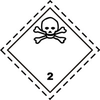 2.3
2.3毒性气体 2.3
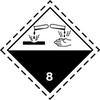 8
8腐蚀性物质 8
特殊规定(Special Provisions)
本条目在 IMDG Code 42-24 一览表中未列明特殊规定。
积载与隔离
| 积载与操作 | 积载类D SW2(Category D SW2) |
|---|---|
| 隔离 | 一览表未列明隔离要求 |
积载操作代码(SW)
避开生活居住处所。
Clear of living quarters.
同类其他 UN 号
- UN1001 乙炔,溶解的
- UN1002 空气,压缩的
- UN1003 空气,冷冻液体
- UN1005 氨,无水的
- UN1006 氩,压缩的
- UN1008 三氟化硼
- UN1009 溴三氟甲烷(制冷气体, R13B1)
- UN1010 丁二烯类,稳定的或丁二烯和碳氢化合物混合物,稳定的,含丁二烯超过 40%
- UN1011 丁烷
- UN1012 丁烯
- UN1013 二氧化碳
- UN1016 一氧化碳,压缩的
延伸阅读
-
危包证怎么办?船级社证、钢瓶证、SOC 罐证的区别
出口危险货物包装使用鉴定结果单(危包证)的办理逻辑,以及它和船级社证、钢瓶证、SOC 罐证分别在什么场景下用、向谁申请。
-
DG 申请表填写常见错误 TOP 10(附船公司退回原因)
DG 申请表(DGD)被船公司退回,十有八九是这十个问题。逐条列出错误表现、船司退回话术和正确填法。
要出这票货?直接生成 DG 申报资料
按 UN2197 自动带出类别、包装组、隔离要求与危包证清单,省掉翻书对表的时间。
生成 DG 申报资料 →