UN3502 加压化学品,有毒的,未另列明的
CHEMICAL UNDER PRESSURE, TOXIC, N.O.S.
基本信息
| UN 编号 | UN3502 |
|---|---|
| 中文名称 | 加压化学品,有毒的,未另列明的 |
| 英文名称 | CHEMICAL UNDER PRESSURE, TOXIC, N.O.S. |
| 危险类别 | 第2.2类(副危险 6.1) |
| 包装类别 | 本条目未划定包装类别 |
| 海洋污染物 | 否 |
| 有限数量 | 0 |
| 例外数量 | E0 |
| EmS 应急措施 | F-C,S-V(F-C, S-V) |
物质性质与外观
液体,糊状或粉末状。依靠推 进剂加压,推进剂符合气体定 义。
Liquids, pastes or powders, pressurized with a propellant which meets the definition of a gas.
出处:IMDG Code 42-24 第 759 页
包装要求
本条目适用的包装导则: P206 ;有限数量 0,例外数量 E0。
P206
P206 本导则适用于UN3500、3501、3502、3503、3504和3505。 除非本规则另有规定,符合第6.2章适用要求的钢瓶和压力桶均获准使用。 (1) 须符合第4.1.6.1条的一般包装要求。 (2) 定期检验的最长试验间隔期为5年。 (3) 钢瓶和压力桶的充灌方式须使非气相在50℃时不超过其水容量的95%,且在60℃ 时不能完全充满。充灌后,在65℃时的内部压力不得超过钢瓶和压力桶的试验压力。气瓶和压力桶内所有物质的蒸气压力和体积膨胀均须考虑在内。对于充有压缩气 P206 体的液体,在计算压力容器的内部压力时,须考虑液体和压缩气体这两种成分。当无法获取实验数据时,须进行以下步骤: (a) 计算液体的蒸气压力和压缩气体在15℃(充灌温度)时的分压; (b) 计算从15℃加热至65℃时液相的体积膨胀,并计算气相的剩余体积; (c) 考虑液相的体积膨胀,计算65℃时压缩气体的分压; 注:须考虑压缩气体在15℃和65℃时的压缩系数。 (d) 计算液体在65℃时的蒸气压; (e) 总压力为液体的蒸气压与压缩气体在65℃时的分压之和; (f) 考虑压缩气体在65℃时在液相中的溶解度。 气瓶或压力桶的试验压力不得小于计算出的总压力减去 100 kPa (1bar)。 如果计算时不知道压缩气体在液相中的溶解度,则可在不考虑气体溶解度(第 (f)款)的情况下计算试验压力。 (4) 推进剂的最低试验压力须符合P200的规定,但不得低于20bar。 补充规定: 钢瓶和压力桶与喷雾设备(如软管和杆组件)连接时不得运输。 特殊包装规定: PP89 对于UN3501、3502、3503、3504和3505,尽管有第4.1.6.1.9.2条的规定,所用不可再充装钢瓶的水容量(以L表示)不得超过1,000L,除以以bar表示的试验压力, 前提是结构标准的容量和压力限制符合符合 ISO 11118:2015 + Amd 1:2019 第 1 条, 该条款将最大容量限制为 50L。 PP97 对于UN 3500的灭火剂,定期检验的最长试验期须为10年。可装在符合第6.2章适用要求的最大水容量为450L的管状容器中运输。
P206 This instruction applies to UN Nos. 3500, 3501, 3502, 3503, 3504 and 3505. Unless otherwise indicated in these provisions, cylinders and pressure drums conforming to the applicable requirements of Chapter 6.2 are authorized. (1) The general packing requirements of 4.1.6.1 shall be met. (2) The maximum test period for periodic inspection shall be 5 years. (3) Cylinders and pressure drums shall be so filled that at 50C the non-gaseous phase does not exceed 95% of ° their water capacity and they are not completely filled at 60C. When filled, the internal pressure at 65C shall not ° ° exceed the test pressure of the cylinders and pressure drums. The vapour pressures and volumetric expansion of all substances in the cylinders and pressure drums shall be taken into account. For liquids charged with a compressed gas both components – the liquid and the compressed gas – have to be taken into consideration in the calculation of the internal pressure in the pressure receptacle. When experimental data is not available, the following steps shall be carried out: (a) calculation of the vapour pressure of the liquid and of the partial pressure of the compressed gas at 15°C (filling temperature); (b) calculation of the volumetric expansion of the liquid phase resulting from the heating from 15°C to 65°C and calculation of the remaining volume for the gaseous phase; (c) calculation of the partial pressure of the compressed gas at 65°C considering the volumetric expansion of the liquid phase; Note: The compressibility factor of the compressed gas at 15°C and 65°C shall be considered. (d) calculation of the vapour pressure of the liquid at 65°C; (e) the total pressure is the sum of the vapour pressure of the liquid and the partial pressure of the compressed gas at 65°C; (f) consideration of the solubility of the compressed gas at 65°C in the liquid phase. The test pressure of the cylinders or pressure drums shall not be less than the calculated total pressure minus kPa (1bar). If the solubility of the compressed gas in the liquid phase is not known for the calculation, the test pressure can be calculated without taking the gas solubility (subparagraph (f)) into account. (4) The minimum test pressure shall be in accordance with P200 for the propellant but shall not be less than 20 bar. Additional requirement: Cylinders and pressure drums shall not be offered for transport when connected with spray application equipment such as a hose and wand assembly. Special packing provisions: PP89 F or UN Nos. 3501, 3502, 3503, 3504 and 3505, notwithstanding 4.1.6.1.9.2, non-refillable cylinders used may have a water capacity in L not exceeding 1 000L divided by the test pressure expressed in bars provided capacity and pressure restrictions of the construction standard comply with clause 1 of ISO 11118:2015 Amd 1:2019, which limits the maximum capacity to 50L. + PP97 For fire-extinguishing agents assigned to UN 3500 the maximum test period for periodic inspection shall be years. They may be transported in tubes of a maximum water capacity of 450 L conforming to the applicable requirements of chapter 6.2.
出处:IMDG Code 42-24 第 201 页(4.1.4.1)
包装特殊规定
对于UN3501、3502、3503、3504和3505,尽管有第4.1.6.1.9.2条的规定,所用不可再充装钢瓶的水容量(以L表示)不得超过1,000L,除以以bar表示的试验压力, 前提是结构标准的容量和压力限制符合符合 ISO 11118:2015 + Amd 1:2019 第 1 条, 该条款将最大容量限制为 50L。
F or UN Nos. 3501, 3502, 3503, 3504 and 3505, notwithstanding 4.1.6.1.9.2, non-refillable cylinders used may have a water capacity in L not exceeding 1 000L divided by the test pressure expressed in bars provided capacity and pressure restrictions of the construction standard comply with clause 1 of ISO 11118:2015 Amd 1:2019, which limits the maximum capacity to 50L. +
中型散装容器(IBC)要求
本条目无中型散装容器(IBC)运输要求。
罐柜运输要求
T50
T50 本可移动罐柜导则适用于非冷冻液化气体和加压化学品(UN3500、3501、3502、3503、 3504和3505)。须符合第4.2.2节的一般规定和第6.7.3节的规定。 T50 最大允许工作压力(bar) 安全降压最大装载联合国非冷冻液化气液面以下小型;无遮蔽规定b 密度编号体开口型;遮阳型; (见6.7.3.7) (kg/l) 隔热型a 1005 氨,无水 29.0 允许见6.7.3.7.3 0.53 25.7 22.0 19.7 1009 溴三氟甲烷 38.0 允许正常 1.13 (制冷气体R 34.0 13B1) 30.0 27.5 1010 丁二烯,稳定 7.5 允许正常 0.55 的 7.0 7.0 7.0 1010 丁二烯与烃类见6.7.3.1最大允许正常见4.2.2.7 混和物,稳定允许工作压力的,含丁二烯的定义超过40% 1011 丁烷 7.0 允许正常 0.51 7.0 7.0 7.0 1012 丁烯 8.0 允许正常 0.53 7.0 7.0 7.0 a “小型”指外壳直径为1.5米或更小的罐体;“无遮蔽”指外壳直径大于1.5米,无隔热层或遮阳板的罐体(见第6.7.3.2.12条);“遮阳板”指外壳直径大于1.5米,有遮阳板的罐体(见第 6.7.3.2.12 条);“隔热”指外壳直径大于 1.5 米,有隔热层(见第 6.7.3.2.12 条);(见第 6.7.3.1条“设计参考温度”的定义)。 b “压力释放”栏中的“正常”一词表示不需要第6.7.3.7.3条中规定的保险片。 T50 最大允许工作压力(bar)小安全降压最大装载联合国非冷冻液化气液面以下型;无遮蔽规定b(见密度编号体开口型;遮阳型; 6.7.3.7) (kg/l) 隔热型a 1017 氯 19.0 不允许见6.7.3.7.3 1.25 17.0 15.0 13.5 1018 氯二氟甲烷 26.0 允许正常 1.03 (制冷气体 24.0 R22) 21.0 19.0 1020 氯五氟乙烷 23.0 允许正常 1.06 (制冷气体 20.0 R115) 18.0 16.0 4 1021 1-氯-1,2,2,2-四 10.3 允许正常 1.20 氟乙烷(制冷 9.8 气体R 124) 7.9 7.0 1027 环丙烷 18.0 允许正常 0.53 16.0 14.5 13.0 1028 二氯二氟甲烷 16.0 允许正常 1.15 (制冷气体 15.0 R12) 13.0 11.5 1029 二氯氟甲烷 7.0 允许正常 1.23 (制冷气体 7.0 R21) 7.0 7.0 1030 1,1-二氟乙烷 16.0 允许正常 0.79 (制冷气体 14.0 R152a) 12.4 T50 11.0 1032 二甲胺,无水 7.0 允许正常 0.59 的 7.0 7.0 7.0 1033 二甲醚 15.5 允许正常 0.58 13.8 12.0 10.6 1036 乙胺 7.0 允许正常 0.61 7.0 7.0 7.0 1037 乙基氯 7.0 允许正常 0.80 7.0 7.0 7.0 1040 含氮环氧乙 - 不允许见6.7.3.7.3 0.78 烷,在50℃时 - 最高总压力为 - 1MPa 10.0 (10bar) 1041 环氧乙烷和二最大允许工作允许正常见4.2.2.7 氧化碳混合压力定义见物,环氧乙烷 6.7.3.1 含量9%-87% a“小型”指外壳直径为 1.5 米或更小的罐体;“无遮蔽”指外壳直径大于 1.5 米,无隔热层或遮阳板的罐体(见第 6.7.3.2.12 条);“遮阳板”指外壳直径大于 1.5 米,有遮阳板的罐体 (见第 6.7.3.2.12 条);“隔热”指外壳直径大于 1.5 米,有隔热层(见第 6.7.3.2.12 条); (见第6.7.3.1条“设计参考温度”的定义)。 b“压力释放”栏中的“正常”一词表示不需要第6.7.3.7.3条中规定的保险片。 T50 联合国非冷冻液化气体最大允许工作压安全降压最大装载编号力(bar)小型; 液面以下规定b 密度无遮蔽型;遮阳开口 (见 (kg/l) 型;隔热型a 6.7.3.7) 1055 异丁烯 8.1 允许正常 0.52 7.0 7.0 7.0 1060 甲基乙炔和丙二烯混合物, 28.0 允许正常 0.43 稳定的 24.5 22.0 20.0 1061 甲胺,无水的 10.8 允许正常 0.58 9.6 7.8 7.0 1062 含三氯硝基甲烷不超过 2% 7.0 不允许见 1.51 4 的甲基溴 7.0 6.7.3.7.31 7.0.51 7.0 1063 甲基氯(制冷气体R40) 14.5 允许正常 0.81 12.7 11.3 10.0 1064 甲硫醇 7.0 不允许见 0.78 7.0 6.7.3.7.31 7.0 7.0 1067 四氧化二氮 7.0 不允许见 1.30 7.0 6.7.3.7.3 7.0 7.0 1075 液化石油气见 6.7.3.1最大允许允许正常见4.2.2.7 工作压力定义 1077 丙烯 28.0 允许正常 0.43 24.5 T50 联合国非冷冻液化气体最大允许工作压安全降压最大装载编号力(bar)小型; 液面以下规定b 密度无遮蔽型;遮阳开口 (见 (kg/l) 型;隔热型a 6.7.3.7) 22.0 20.0 1078 制冷气体,未另列明的见6.7.3.1最大允允许正常见4.2.2.7 许工作压力定义 1079 二氧化硫 11.6 不允许见 1.23 10.3 6.7.3.7.3 8.5 7.6 1082 三氟氯乙烯,稳定的(制冷 17.0 不允许见 1.13 气体R1113) 15.0 6.7.3.7.3 13.1 11.6 1083 三甲胺,无水的 7.0 允许正常 0.56 7.0 7.0 7.0 1085 乙烯基溴,稳定的 7.0 允许正常 1.37 7.0 7.0 7.0 1086 乙烯基氯,稳定的 10.6 允许正常 0.81 9.3 8.0 7.0 a “小型”指外壳直径为1.5米或更小的罐体;“无遮蔽”指外壳直径大于1.5米,无隔热层或遮阳板的罐体(见第6.7.3.2.12条);“遮阳板”指外壳直径大于1.5米,有遮阳板的罐体(见第 6.7.3.2.12 条);“隔热”指外壳直径大于 1.5 米,有隔热层(见第 6.7.3.2.12 条);(见第 6.7.3.1条“设计参考温度”的定义)。 b “压力释放”栏中的“正常”一词表示不需要第6.7.3.7.3条中规定的保险片。 T50 联合国非冷冻液化气最大允许工作液面以下安全降压最大装载编号体压力(bar)小开口规定b(见密度型;无遮蔽 6.7.3.7) (kg/l) 型;遮阳型; 隔热型a 1087 乙烯基甲基 7.0 允许正常 0.67 醚,稳定的 7.0 7.0 7.0 1581 三氯硝基甲烷 7.0 不允许见6.7.3.7.3 1.51 和甲基溴混合 7.0 物,含三氯硝 7.0 基甲烷超过2% 7.0 1582 三氯硝基甲烷 19.2 不允许见6.7.3.7.3 0.81 和氯甲烷混合 16.9 物 15.1 13.1 4 1858 六氟丙烯(制 19.2 允许正常 1.11 冷气体 R 16.9 1216) 15.1 13.1 1912 氯甲烷和二氯 15.2 允许正常 0.81 甲烷混合物 13.0 11.6 10.1 1958 1,2-二氯- 7.0 允许正常 1.30 1,1,2,2-四氟乙 7.0 烷(制冷气体R 7.0 114) 7.0 1965 液化烃类气体见6.7.3.1最大允许正常见4.2.2.7 混合物,未另允许工作压力列明的定义 1969 异丁烷 8.5 允许正常 0.49 7.5 7.0 7.0 T50 联合国非冷冻液化气最大允许工作液面以下安全降压最大装载编号体压力(bar)小开口规定b(见密度型;无遮蔽 6.7.3.7) (kg/l) 型;遮阳型; 隔热型a 1973 氯二氟甲烷和 28.3 允许正常 1.05 氯五氟乙烷混 25.3 合物,有固定 22.8 沸点,前者约 20.3 占 49%(制冷气体R502) 1974 氯二氟溴甲烷 7.4 允许正常 1.61 (制冷气体 7.0 R12B1) 7.0 7.0 1976 八氟环丁烷 8.8 允许正常 1.34 (制冷气体 7.8 RC318) 7.0 7.0 1978 丙烷 22.5 允许正常 0.42 20.4 18.0 16.5 1983 1-氯-2,2,2-三氟 7.0 允许正常 1.18 乙烷(制冷气 7.0 体R133a) 7.0 7.0 2035 1,1,1-三氟乙烷 31.0 允许正常 0.76 (制冷气体 27.5 R143a) 24.2 21.8 a “小型”指外壳直径为1.5米或更小的罐体;“无遮蔽”指外壳直径大于1.5米,无隔热层或遮阳板的罐体(见第6.7.3.2.12条);“遮阳板”指外壳直径大于1.5米,有遮阳板的罐体(见第 6.7.3.2.12 条);“隔热”指外壳直径大于 1.5 米,有隔热层(见第 6.7.3.2.12 条);(见第 6.7.3.1条“设计参考温度”的定义)。 b “压力释放”栏中的“正常”一词表示不需要第6.7.3.7.3条中规定的保险片。 (续) T50 联合国非冷冻液化气体最大允许工作压力液面以下安全降压最大装载编号 (bar)小型;无遮蔽开口规定b(见密度型;遮阳型;隔热型a 6.7.3.7) (kg/l) 2424 八氟丙烷(制冷气 23.1 允许正常 1.07 体R218) 20.8 18.6 16.6 2517 1-氯-1,1-二氟乙烷 8.9 允许正常 0.99 (制冷气体 7.8 R142b) 7.0 7.0 2602 二氯二氟甲烷和二 20.0 允许正常 1.01 氟乙烷的共沸混合 18.0 物,含二氯二氟甲 16.0 烷约 74%(制冷气 14.5 体R500) 3057 三氟乙酰氯 14.6 不允许见6.7.3.7.3 1.17 12.9 11.3 9.9 3070 环氧乙烷和二氯二 14.0 允许见6.7.3.7.3 1.09 氟甲烷混合物,含 12.0 环氧乙烷不超过 11.0 12.5% 9.0 3153 全氟(甲基乙烯基 14.3 允许正常 1.14 醚) 13.4 11.2 10.2 3159 1,1,1,2-四氟乙烷 17.7 允许正常 1.04 (制冷气体 15.7 R134a) 13.8 12.1 3161 液化气体,易燃, 见6.7.3.1最大允许工允许正常见4.2.2.7 未另列明作压定义 (续) T50 联合国非冷冻液化气体最大允许工作压力液面以下安全降压最大装载编号 (bar)小型;无遮蔽开口规定b(见密度型;遮阳型;隔热型a 6.7.3.7) (kg/l) 3163 液化气体,未另列见6.7.3.1最大允许工允许正常见4.2.2.7 明作压力定义 3220 五氟乙烷(制冷气 34.4 允许正常 0.87 体R125) 34.8 27.5 24.5 3252 二氟甲烷(制冷气 43.0 允许正常 0.78 体R32) 39.0 34.4 30.5 3296 七氟丙烷(制冷气 16.0 允许正常 1.20 体R227) 14.0 12.5 11.0 3297 环氧乙烷和氯四氟 8.1 允许正常 1.16 乙烷混合物,含环 7.0 氧乙烷不超过8.8% 7.0 7.0 3298 环氧乙烷和五氟乙 25.9 允许正常 1.02 烷混合物,含环氧 23.4 乙烷不超过7.9% 20.9 18.6 3299 环氧乙烷和四氟乙 16.7 允许正常 1.03 烷混合物,含环氧 14.7 乙烷不超过5.6% 12.9 11.2 a“小型”指外壳直径为 1.5米或更小的罐体;“无遮蔽”指外壳直径大于 1.5米,无隔热层或遮阳板的罐体(见第6.7.3.2.12条);“遮阳板”指外壳直径大于1.5米,有遮阳板的罐体(见第 6.7.3.2.12 条);“隔热”指外壳直径大于 1.5 米,有隔热层(见第 6.7.3.2.12 条);(见第 6.7.3.1条“设计参考温度”的定义)。 b“压力释放”栏中的“正常”一词表示不需要第6.7.3.7.3条中规定的保险片。 (续) T50 联合国非冷冻液化气体最大允许工作压力液面以下安全降压最大装载编号 (bar) 开口规定b(见密度小型;无遮蔽型; 6.7.3.7) (kg/l) 遮阳型;隔热型a 3318 氨溶液,水溶液在见6.7.3.1最大允许允许见6.7.3.7.3 见4.2.2.7 15℃时相对密度小工作压力定义于 0.880,含氨量超过50% 3337 制冷气体R 404A 31.6 允许正常 0.82 28.3 25.3 22.5 3338 制冷气体R 407A 31.3 允许正常 0.94 28.1 25.1 22.4 3339 制冷气体R407B 33.0 允许正常 0.93 29.6 26.5 23.6 3340 制冷气体R407C 29.9 允许正常 0.95 26.8 23.9 21.3 3500 加压化学品,未另见6.7.3.1中“最大允许见6.7.3.7.3 TP4c 列明允许工作压力”定义 3501 加压化学品 , 易见6.7.3.1中“最大允许见6.7.3.7.3 TP4c 燃,未另列明允许工作压力”定义 3502 加压化学品 , 有见6.7.3.1中“最大允许见6.7.3.7.3 TP4c 毒,未另列明允许工作压力”定义 (续) T50 3503 加压化学品,腐蚀见6.7.3.1中“最大允许见6.7.3.7.3 TP4c 性,未另列明允许工作压力”定义 3504 加压化学品 , 易见6.7.3.1中“最大允许见6.7.3.7.3 TP4c 燃,有毒,未另列允许工作压力”定明义 3505 加压化学品易燃, 见6.7.3.1中“最大允许见6.7.3.7.3 TP4c 腐蚀性,未另列明允许工作压力”定义 a“小型”指外壳直径为 1.5 米或更小的罐体;“无遮蔽”指外壳直径大于 1.5 米,无隔热层或遮阳板的罐体(见第 6.7.3.2.12 条);“遮阳板”指外壳直径大于 1.5 米,有遮阳板的罐体 (见第 6.7.3.2.12 条);“隔热”指外壳直径大于 1.5 米,有隔热层(见第 6.7.3.2.12 条); (见第6.7.3.1条“设计参考温度”的定义)。 b“压力释放”栏中的“正常”一词表示不需要第6.7.3.7.3条中规定的保险片。 c 对于UN 3500、3501、3502、3503、3504和3505,须考虑充灌度而不是最大充灌率。
T50 This portable tank instruction applies to non-refrigerated liquefied gases and chemicals under pressure (UN Nos. 3500, 3501, 3502, 3503, 3504 and 3505). The general provisions of 4.2.2 and the provisions of 6.7.3 shall be met. Maximum allowable working pressure Openings Pressure relief Maximum UN Non-refrigerated liquefied (bar) Small; Bare; below provisionsb filling ratio No. gases Sunshield; Insulated liquid level (see 6.7.3.7) (kg/L) respectivelya 1005 Ammonia, anhydrous 29.0 Allowed See 6.7.3.7.3 0.53 25.7 22.0 19.7 1009 Bromotrifluoromethane 38.0 Allowed Normal 1.13 (Refrigerant gas R 13B1) 34.0 30.0 27.5 1010 Butadienes, stabilized 7.5 Allowed Normal 0.55 7.0 7.0 7.0 1010 Butadienes and hydrocarbon See MAWP definition Allowed Normal See 4.2.2.7 mixture, stabilized with more in 6.7.3.1 than 40% butadienes 1011 Butane 7.0 Allowed Normal 0.51 7.0 7.0 7.0 1012 Butylene 8.0 Allowed Normal 0.53 7.0 7.0 7.0 a “Small” means tanks having a shell with a diameter of 1.5 metre or less; “Bare” means tanks having a shell with a diameter of more than 1.5 metre without insulation or sun shield (see 6.7.3.2.12); “Sunshield” means tanks having a shell with a diameter of more than 1.5 metre with sun shield (see 6.7.3.2.12); “Insulated” means tanks having a shell with a diameter of more than 1.5 metre with insulation (see 6.7.3.2.12); (see definition of “Design reference temperature” in 6.7.3.1). b The word “Normal” in the pressure relief column indicates that a frangible disc as specified in 6.7.3.7.3 is not required. (continued) T50 Maximum allowable working pressure Openings Pressure relief Maximum UN Non-refrigerated liquefied (bar) Small; Bare; below provisionsb filling ratio No. gases Sunshield; Insulated liquid level (see 6.7.3.7) (kg/L) respectivelya 1017 Chlorine 19.0 Not allowed See 6.7.3.7.3 1.25 17.0 15.0 13.5 1018 Chlorodifluoromethane 26.0 Allowed Normal 1.03 (Refrigerant gas R 22) 24.0 21.0 19.0 1020 Chloropentafluoroethane 23.0 Allowed Normal 1.06 (Refrigerant gas R 115) 20.0 18.0 16.0 1021 1-Chloro-1,2,2,2- 10.3 Allowed Normal 1.20 tetrafluoroethane 9.8 (Refrigerant gas R 124) 7.9 7.0 1027 Cyclopropane 18.0 Allowed Normal 0.53 16.0 14.5 13.0 1028 Dichlorodifluoromethane 16.0 Allowed Normal 1.15 (Refrigerant gas R 12) 15.0 13.0 11.5 1029 Dichlorofluoromethane 7.0 Allowed Normal 1.23 (Refrigerant gas R 21) 7.0 7.0 7.0 1030 1,1-Difluoroethane 16.0 Allowed Normal 0.79 (Refrigerant gas R 152a) 14.0 12.4 11.0 1032 Dimethylamine, anhydrous 7.0 Allowed Normal 0.59 7.0 7.0 7.0 1033 Dimethyl ether 15.5 Allowed Normal 0.58 13.8 12.0 10.6 1036 Ethylamine 7.0 Allowed Normal 0.61 7.0 7.0 7.0 1037 Ethyl chloride 7.0 Allowed Normal 0.80 7.0 7.0 7.0 1040 Ethylene oxide with nitrogen – Not allowed See 6.7.3.7.3 0.78 up to a total pressure of 1 MPa – (10 bar) at 50C – ° 10.0 1041 Ethylene oxide and carbon See MAWP Allowed Normal See 4.2.2.7 dioxide mixture with more than definition 9% but not more than 87% in 6.7.3.1 ethylene oxide a “Small” means tanks having a shell with a diameter of 1.5 metre or less; “Bare” means tanks having a shell with a diameter of more than 1.5 metre without insulation or sun shield (see 6.7.3.2.12); “Sunshield” means tanks having a shell with a diameter of more than 1.5 metre with sun shield (see 6.7.3.2.12); “Insulated” means tanks having a shell with a diameter of more than 1.5 metre with insulation (see 6.7.3.2.12); (see definition of “Design reference temperature” in 6.7.3.1). b The word “Normal” in the pressure relief column indicates that a frangible disc as specified in 6.7.3.7.3 is not required. (continued) T50 Maximum allowable working pressure Openings Pressure relief Maximum UN Non-refrigerated liquefied (bar) Small; Bare; below provisionsb filling ratio No. gases Sunshield; Insulated liquid level (see 6.7.3.7) (kg/L) respectivelya 1055 Isobutylene 8.1 Allowed Normal 0.52 7.0 7.0 7.0 1060 Methylacetylene and propadiene 28.0 Allowed Normal 0.43 mixture, stabilized 24.5 22.0 20.0 1061 Methylamine, anhydrous 10.8 Allowed Normal 0.58 9.6 7.8 7.0 1062 Methyl bromide with not more 7.0 Not allowed See 6.7.3.7.3 1.51 than 2% chloropicrin 7.0 7.0 7.0 1063 Methyl chloride 14.5 Allowed Normal 0.81 (Refrigerant gas R40) 12.7 11.3 10.0 1064 Methyl mercaptan 7.0 Not allowed See 6.7.3.7.3 0.78 7.0 7.0 7.0 1067 Dinitrogen tetroxide 7.0 Not allowed See 6.7.3.7.3 1.30 7.0 7.0 7.0 4 1075 Petroleum gas, liquefied See MAWP definition Allowed Normal See 4.2.2.7 in 6.7.3.1 1077 Propylene 28.0 Allowed Normal 0.43 24.5 22.0 20.0 1078 Refrigerant gas, N.O.S. See MAWP definition Allowed Normal See 4.2.2.7 in 6.7.3.1 1079 Sulphur dioxide 11.6 Not allowed See 6.7.3.7.3 1.23 10.3 8.5 7.6 1082 Trifluorochloroethylene, 17.0 Not allowed See 6.7.3.7.3 1.13 stabilized 15.0 (Refrigerant gas R 1113) 13.1 11.6 1083 Trimethylamine, anhydrous 7.0 Allowed Normal 0.56 7.0 7.0 7.0 1085 Vinyl bromide, stabilized 7.0 Allowed Normal 1.37 7.0 7.0 7.0 1086 Vinyl chloride, stabilized 10.6 Allowed Normal 0.81 9.3 8.0 7.0 a “Small” means tanks having a shell with a diameter of 1.5 metre or less; “Bare” means tanks having a shell with a diameter of more than 1.5 metre without insulation or sun shield (see 6.7.3.2.12); “Sunshield” means tanks having a shell with a diameter of more than 1.5 metre with sun shield (see 6.7.3.2.12); “Insulated” means tanks having a shell with a diameter of more than 1.5 metre with insulation (see 6.7.3.2.12); (see definition of “Design reference temperature” in 6.7.3.1). b The word “Normal” in the pressure relief column indicates that a frangible disc as specified in 6.7.3.7.3 is not required. (continued) T50 Maximum allowable working pressure Openings Pressure relief Maximum UN Non-refrigerated liquefied (bar) Small; Bare; below provisionsb filling ratio No. gases Sunshield; Insulated liquid level (see 6.7.3.7) (kg/L) respectivelya 1087 Vinyl methyl ether, stabilized 7.0 Allowed Normal 0.67 7.0 7.0 7.0 1581 Chloropicrin and methyl bromide 7.0 Not allowed See 6.7.3.7.3 1.51 mixture with more than 2% 7.0 chloropicrin 7.0 7.0 1582 Chloropicrin and methyl chloride 19.2 Not allowed See 6.7.3.7.3 0.81 mixture 16.9 15.1 13.1 1858 Hexafluoropropylene 19.2 Allowed Normal 1.11 (Refrigerant gas R 1216) 16.9 15.1 13.1 1912 Methyl chloride and methylene 15.2 Allowed Normal 0.81 chloride mixture 13.0 11.6 10.1 1958 1,2-Dichloro-1,1,2,2- 7.0 Allowed Normal 1.30 tetrafluoroethane 7.0 (Refrigerant gas R 114) 7.0 7.0 1965 Hydrocarbon gas, mixture See MAWP definition Allowed Normal See 4.2.2.7 liquefied, N.O.S. in 6.7.3.1 1969 Isobutane 8.5 Allowed Normal 0.49 7.5 7.0 7.0 1973 Chlorodifluoromethane and 28.3 Allowed Normal 1.05 chloropentafluoroethane mixture 25.3 with fixed boiling point, with 22.8 approximately 20.3 49% chlorodifluoromethane (Refrigerant gas R 502) 1974 Chlorodifluorobromomethane 7.4 Allowed Normal 1.61 (Refrigerant gas R 12B1) 7.0 7.0 7.0 1976 Octafluorocyclobutane 8.8 Allowed Normal 1.34 (Refrigerant gas RC 318) 7.8 7.0 7.0 1978 Propane 22.5 Allowed Normal 0.42 20.4 18.0 16.5 1983 1-Chloro-2,2,2-trifluoroethane 7.0 Allowed Normal 1.18 (Refrigerant gas R 133a) 7.0 7.0 7.0 2035 1,1,1-Trifluoroethane 31.0 Allowed Normal 0.76 (Refrigerant gas R 143a) 27.5 24.2 21.8 a “Small” means tanks having a shell with a diameter of 1.5 metre or less; “Bare” means tanks having a shell with a diameter of more than 1.5 metre without insulation or sun shield (see 6.7.3.2.12); “Sunshield” means tanks having a shell with a diameter of more than 1.5 metre with sun shield (see 6.7.3.2.12); “Insulated” means tanks having a shell with a diameter of more than 1.5 metre with insulation (see 6.7.3.2.12); (see definition of “Design reference temperature” in 6.7.3.1). b The word “Normal” in the pressure relief column indicates that a frangible disc as specified in 6.7.3.7.3 is not required. (continued) T50 Maximum allowable working pressure Openings Pressure relief Maximum UN Non-refrigerated liquefied (bar) Small; Bare; below provisionsb filling ratio No. gases Sunshield; Insulated liquid level (see 6.7.3.7) (kg/L) respectivelya 2424 Octafluoropropane 23.1 Allowed Normal 1.07 (Refrigerant gas R 218) 20.8 18.6 16.6 2517 1-Chloro-1,1-difluoroethane 8.9 Allowed Normal 0.99 (Refrigerant gas R 142b) 7.8 7.0 7.0 2602 Dichlorodifluoromethane and 20.0 Allowed Normal 1.01 difluoroethane azeotropic 18.0 mixture with approximately 16.0 74% dichlorodifluoromethane 14.5 (Refrigerant gas R 500) 3057 Trifluoroacetyl chloride 14.6 Not allowed See 6.7.3.7.3 1.17 12.9 11.3 9.9 3070 Ethylene oxide and 14.0 Allowed See 6.7.3.7.3 1.09 dichlorodifluoromethane 12.0 mixture, with not more 11.0 than 12.5% ethylene oxide 9.0 3153 Perfluoro(methyl vinyl ether) 14.3 Allowed Normal 1.14 13.4 11.2 10.2 3159 1,1,1,2-Tetrafluoroethane 17.7 Allowed Normal 1.04 (Refrigerant gas R 134a) 15.7 13.8 4 12.1 3161 Liquefied gas, flammable, N.O.S. See MAWP definition Allowed Normal See 4.2.2.7 in 6.7.3.1 3163 Liquefied gas, N.O.S. See MAWP definition Allowed Normal See 4.2.2.7 in 6.7.3.1 3220 Pentafluoroethane 34.4 Allowed Normal 0.87 (Refrigerant gas R 125) 30.8 27.5 24.5 3252 Difluoromethane 43.0 Allowed Normal 0.78 (Refrigerant gas R 32) 39.0 34.4 30.5 3296 Heptafluoropropane 16.0 Allowed Normal 1.20 (Refrigerant gas R 227) 14.0 12.5 11.0 3297 Ethylene oxide and 8.1 Allowed Normal 1.16 chlorotetrafluoroethane mixture, 7.0 with not more than 8.8% 7.0 ethylene oxide 7.0 3298 Ethylene oxide and 25.9 Allowed Normal 1.02 pentafluoroethane mixture, with 23.4 not more than 7.9% ethylene 20.9 oxide 18.6 3299 Ethylene oxide and 16.7 Allowed Normal 1.03 tetrafluoroethane mixture, with 14.7 not more than 5.6% ethylene 12.9 oxide 11.2 a “Small” means tanks having a shell with a diameter of 1.5 metre or less; “Bare” means tanks having a shell with a diameter of more than 1.5 metre without insulation or sun shield (see 6.7.3.2.12); “Sunshield” means tanks having a shell with a diameter of more than 1.5 metre with sun shield (see 6.7.3.2.12); “Insulated” means tanks having a shell with a diameter of more than 1.5 metre with insulation (see 6.7.3.2.12); (see definition of “Design reference temperature” in 6.7.3.1). b The word “Normal” in the pressure relief column indicates that a frangible disc as specified in 6.7.3.7.3 is not required. (continued) T50 Maximum allowable working pressure Openings Pressure relief Maximum UN Non-refrigerated liquefied (bar) Small; Bare; below provisionsb filling ratio No. gases Sunshield; Insulated liquid level (see 6.7.3.7) (kg/L) respectivelya 3318 Ammonia solution, relative See MAWP definition Allowed See 6.7.3.7.3 See 4.2.2.7 density less than 0.880 at 15C in 6.7.3.1 ° in water, with more than 50% ammonia 3337 Refrigerant gas R 404A 31.6 Allowed Normal 0.82 28.3 25.3 22.5 3338 Refrigerant gas R 407A 31.3 Allowed Normal 0.94 28.1 25.1 22.4 3339 Refrigerant gas R 407B 33.0 Allowed Normal 0.93 29.6 26.5 23.6 3340 Refrigerant gas R 407C 29.9 Allowed Normal 0.95 26.8 23.9 21.3 3500 Chemical under pressure, n.o.s. See MAWP definition Allowed See 6.7.3.7.3 TP4c in 6.7.3.1 3501 Chemical under pressure, See MAWP definition Allowed See 6.7.3.7.3 TP4c flammable, n.o.s. in 6.7.3.1 3502 Chemical under pressure, toxic, See MAWP definition Allowed See 6.7.3.7.3 TP4c n.o.s. in 6.7.3.1 3503 Chemical under pressure, See MAWP definition Allowed See 6.7.3.7.3 TP4c corrosive, n.o.s. in 6.7.3.1 3504 Chemical under pressure, See MAWP definition Allowed See 6.7.3.7.3 TP4c flammable, toxic, n.o.s. in 6.7.3.1 3505 Chemical under pressure, See MAWP definition Allowed See 6.7.3.7.3 TP4c flammable, corrosive, n.o.s. in 6.7.3.1 a “Small” means tanks having a shell with a diameter of 1.5 metre or less; “Bare” means tanks having a shell with a diameter of more than 1.5 metre without insulation or sun shield (see 6.7.3.2.12); “Sunshield” means tanks having a shell with a diameter of more than 1.5 metre with sun shield (see 6.7.3.2.12); “Insulated” means tanks having a shell with a diameter of more than 1.5 metre with insulation (see 6.7.3.2.12); (see definition of “Design reference temperature” in 6.7.3.1). b The word “Normal” in the pressure relief column indicates that a frangible disc as specified in 6.7.3.7.3 is not required. c For UN Nos. 3500, 3501, 3502, 3503, 3504 and 3505, the degree of filling shall be considered instead of the maximum filling ratio.
罐柜特殊规定
充罐度不得超过90%,或者为主管当局批准的任何其他值(见第4.2.1.16.2 条)。
The degree of filling shall not exceed 90% or, alternatively, any other value approved by the competent authority (see 4.2.1.16.2).
可移动罐柜不得在与喷涂设备连接时运输。
Portable tanks shall not be transported when connected with spray application equipment.
运输标签与标记
本货物包件应张贴以下标签与标记:
 2.2
2.2非易燃无毒气体 2.2
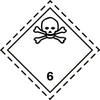 6.1
6.1毒性物质 6.1
⚠ 海洋污染物(MP)须按本批货实际判定:本条目为未列明的泛指条目(N.O.S.),一览表第 4 栏未标 P 并不代表排除适用(2.10.2.4);按 2.10.2.5,如该批货特性符合第 2.9.3 节的海洋污染物标准,须作为海洋污染物运输并加贴 MP 标记。
特殊规定(Special Provisions)
本条目适用特殊规定: 274、362。
SP 274
运输单证和包装标记的正确运输名称须以技术名称作补充(见3.1.2.8.1)。 ■ 仅就UN 3077和UN 3082而言,技术名称可以是《危险货物一览表》第2栏中以大写字母显示的名称,条件是该名称不包括“N.O.S.”,且未指定特别规定274。 须使用最恰当地描述该物质或混合物的名称,例如: ■ UN 3082,环境有害物质,液体,未另列明(涂料) ■ UN 3082,环境有害物质,液体,未另列明(香水产品)。
For the purposes of documentation and package marking, the proper shipping name shall be supplemented with the technical name (see 3.1.2.8.1). For UN 3077 and UN 3082 only, the technical name may be a name shown in capital letters in column 2 of the Dangerous Goods List, provided that this name does not include “N.O.S.” and that special provision 274 is not assigned. The name which most appropriately describes the substance or mixture shall be used, e.g.: UN 3082, ENVIRONMENTALLY HAZARDOUS SUBSTANCE, LIQUID, N.O.S. (PAINT) UN 3082, ENVIRONMENTALLY HAZARDOUS SUBSTANCE, LIQUID, N.O.S. (PERFUMERY PRODUCTS).
出处:IMDG Code 42-24 第 773 页
SP 362
本条目适用于符合第2.2.1.1和2.2.1.2.1或2.2.1.2.2条中气体定义、由推进剂加压的液体、糊状物或粉末。 注:喷雾器中加压喷洒的化学品,按UN 1950运输。须适用以下规定:.1 加压化学品的分类,须根据各种成分在不同状态下的危险特性: – 推进剂; – 液态;或 – 固态。 如果这些成分中的一个成分,可以是一种纯净物质,也可以是混合物,需按易燃分类,则加压化学品按第2.1类划为易燃液体。易燃成分是符合以下标准的易燃液体和液体混合物、易燃固体和固体混合物,或易燃气体和气体混合物:.1 易燃液体系指闪点不超过93℃的液体;.2 易燃固体系指符合本《规则》第2.4.2.2条标准的固体;.3 易燃气体系指符合本《规则》第2.2.2.1条标准的气体;.2 第2.3类气体和有第5.1类副危险性的气体,不得在加压化学品中用作推进剂;.3 如液体或固体成分的分类是第6.1类、包装类II或III,或第8类、包装类II或III的危险货物,加压化学品须划为第6.1类或第8类的一个次要危险,并给予相应的联合国编号。成分的分类是第6.1类、包装类I, 或第8类、包装类I的液体或固体,不得在此正确运输名称下运输;.4 此外,加压的化学品,成分符合以下性质者,不得使用此正确运输名称运输:第1类,爆炸品;第3类,液态退敏爆炸品;第4.1类,自反应物质和固态退敏爆炸品;第4.2类,易自燃的物质;第4.3类,遇水放出易燃气体的物质;第5.1类,氧化性物质;第5.2类,有机过氧化物;第6.2类,感染性物质;或第7类,放射性物质。.5 在第3.2章《危险货物一览表》第9或第11栏中规定有PP86或TP7的物质,要求排净蒸气空间的空气者,不得使用此类物质在本联合国编号下运输,而须在第3.2章《危险货物一览表》中其相应的联合国编号下运输。
This entry applies to liquids, pastes or powders, pressurized with a propellant which meets the definition of a gas in 2.2.1.1 and 2.2.1.2.1 or 2.2.1.2.2. Note: A chemical under pressure in an aerosol dispenser shall be transported under UN 1950. The following provisions shall apply:.1 the chemical under pressure shall be classified based on the hazard characteristics of the components in the different states: – the propellant; – the liquid; or – the solid. If one of these components, which can be a pure substance or a mixture, needs to be classified as flammable, the chemical under pressure shall be classified as flammable in class 2.1. Flammable components are flammable liquids and liquid mixtures, flammable solids and solid mixtures or flammable gases and gas mixtures meeting the following criteria:.1 a flammable liquid is a liquid having a flashpoint of not more than 93C; °.2 a flammable solid is a solid which meets the criteria in 2.4.2.2 of this Code;.3 a flammable gas is a gas which meets the criteria in 2.2.2.1 of this Code;.2 gases of class 2.3 and gases with a subsidiary hazard of 5.1 shall not be used as a p ropellant in a chemical under pressure;.3 where the liquid or solid components are classified as dangerous goods of class 6.1, packing groups II or III, or class 8, packing groups II or III, the chemical under pressure shall be assigned a subsidiary hazard of class 6.1 or class 8 and the appropriate UN number shall be assigned. Components classified in class 6.1, packing group I, or class 8, packing group I, shall not be used for transport under this proper shipping name;.4 in addition, chemicals under pressure with components meeting the properties of: class 1, explosives; class 3, liquid desensitized explosives; class 4.1, self-reactive substances and solid desensitized explosives; class 4.2, substances liable to spontaneous combustion; class 4.3, substances which, in contact with water, emit flammable gases; class 5.1, oxidizing substances; class 5.2, organic peroxides; class 6.2, Infectious substances or class 7, Radioactive material, shall not be used for transport under this proper shipping name;.5 substances to which PP86 or TP7 are assigned in column 9 and column 14 of the Dangerous Goods List in chapter 3.2 and therefore require air to be eliminated from the vapour space, shall not be used for transport under this UN number but shall be transported under their respective UN numbers as listed in the Dangerous Goods List of chapter 3.2.
出处:IMDG Code 42-24 第 780 页
积载与隔离
| 积载与操作 | 积载类D SW2(Category D SW2) |
|---|---|
| 隔离 | 一览表未列明隔离要求 |
积载操作代码(SW)
避开生活居住处所。
Clear of living quarters.
同类其他 UN 号
- UN1001 乙炔,溶解的
- UN1002 空气,压缩的
- UN1003 空气,冷冻液体
- UN1005 氨,无水的
- UN1006 氩,压缩的
- UN1008 三氟化硼
- UN1009 溴三氟甲烷(制冷气体, R13B1)
- UN1010 丁二烯类,稳定的或丁二烯和碳氢化合物混合物,稳定的,含丁二烯超过 40%
- UN1011 丁烷
- UN1012 丁烯
- UN1013 二氧化碳
- UN1016 一氧化碳,压缩的
延伸阅读
-
危包证怎么办?船级社证、钢瓶证、SOC 罐证的区别
出口危险货物包装使用鉴定结果单(危包证)的办理逻辑,以及它和船级社证、钢瓶证、SOC 罐证分别在什么场景下用、向谁申请。
-
DG 申请表填写常见错误 TOP 10(附船公司退回原因)
DG 申请表(DGD)被船公司退回,十有八九是这十个问题。逐条列出错误表现、船司退回话术和正确填法。
要出这票货?直接生成 DG 申报资料
按 UN3502 自动带出类别、包装组、隔离要求与危包证清单,省掉翻书对表的时间。
生成 DG 申报资料 →